

 EN
EN

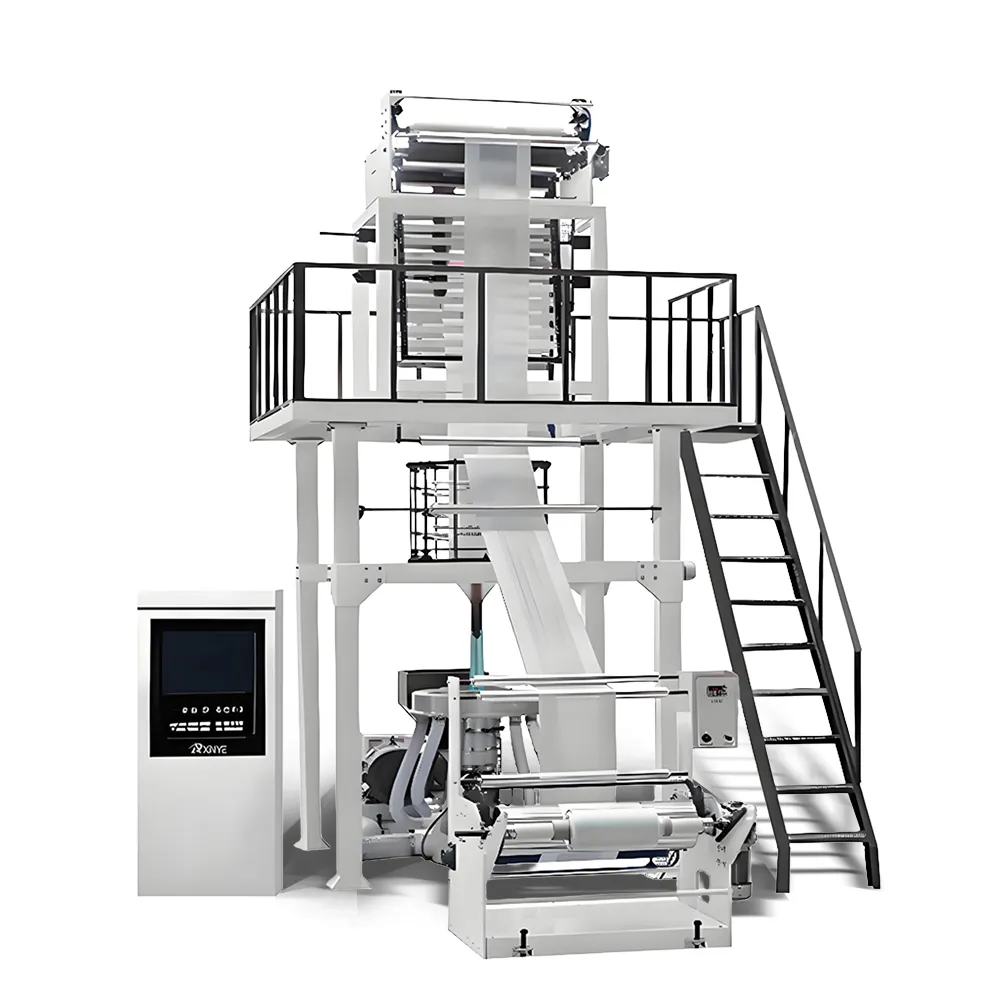
How Energy Efficiency Reduces Costs and Boosts Output in PE Film Production
Impact of energy-efficient systems on operational costs and sustainability
Film blowing machines that save energy can cut down operating expenses anywhere from 18 to 32 percent without affecting how much they produce each day, based on recent data from polymer processing experts in 2023. The secret behind these savings lies in their design features like servo driven motors that waste less power when adjusting speeds, plus variable frequency drives that match electricity usage to what's actually needed during the extrusion process. A packaging company somewhere in North America saw their bottom line improve by around $280k yearly once they upgraded to smart thermal control systems. These new controls slashed heater energy consumption by over 40%. And beyond just saving money, these kinds of upgrades help companies meet sustainability targets too. By reducing carbon dioxide emissions for every ton of polyethylene film made, manufacturers are taking real steps toward responsible resource management as outlined in international environmental goals.
Key components driving efficiency: Motors, heaters, and control systems
Three core subsystems determine energy performance in blown film extrusion:
| Component | Traditional System | Energy-Efficient Upgrade | Energy Reduction |
|---|---|---|---|
| Drive Motors | Fixed-speed AC | Servo with regenerative braking | 38–52% |
| Barrel Heaters | Band heaters | Ceramic infrared + insulation | 29–44% |
| Process Control | Manual adjustment | AI-powered melt pressure stabilization | 19–27% |
These upgrades enable precise energy deployment across bubble formation, cooling, and winding stages, enhancing both efficiency and product consistency.
Advanced drive systems: Real-world energy savings in polyethylene film lines
In a recent 2024 study across 27 LDPE film production facilities, researchers discovered something interesting about permanent magnet synchronous motors (PMSMs) equipped with dynamic torque control systems. These motors cut down those annoying energy surges when switching between different materials by nearly two thirds. Combine them with automated gauge profiling technology and manufacturers saw remarkable results too. Thickness remained consistently within a tight range of plus or minus 2%, all while consuming almost a third less electricity compared to traditional extruder drive setups. What makes this even better for plant managers? The load sensing software keeps getting smarter over time. It automatically tweaks motor performance based on how sticky or runny the resin gets during processing, so companies save money on their power bills without slowing down production speeds at all.
Innovations in thermal and motor design for lower energy consumption
The new hybrid induction heating systems are really making a difference, slashing preheating energy needs by almost half thanks to their staged electromagnetic activation approach. When it comes to extruder screws, manufacturers have managed to shave off between 23 and 27 percent of their weight. This reduction in mass means there's less rotational inertia to deal with, so machines can speed up about 18 percent faster while maintaining the same level of torque. And let's not forget about those polymer flow simulations either. These advanced modeling techniques help reshape die lips in ways that cut down on extrusion pressure requirements by around 14 to 19 percent. The result? Motors work harder but consume less power throughout each production cycle, which adds up to significant savings over time.
Blown Film Extrusion Process: Core Technology for Stable PE Film Manufacturing
From Resin to Roll: Understanding the Extrusion Workflow in Film Blowing Machines
The blown film extrusion process transforms polyethylene (PE) resin pellets into uniform films through four critical stages:
- Resin Feeding and Melting: High-purity PE pellets are fed into a heated extruder barrel where they melt at controlled temperatures (typically 180–230°C)
- Melt Filtration and Pressure Control: A screen changer removes contaminants while maintaining consistent pressure (15–30 MPa) for stable bubble formation
- Die Formation: The molten polymer exits through an annular die, forming a tubular “bubble” inflated by internal air pressure (0.05–0.2 bar)
- Cooling and Winding: Dual air rings cool the bubble symmetrically before collapsing it into flat film rolls with ±5% thickness variation—a key benchmark for packaging-grade films
Optimized workflows reduce material waste by up to 12% compared to conventional methods, as shown in industrial trials documented in a 2024 polymer processing report.
Extruder Design and Function: Ensuring Consistent Melt Delivery
Modern extruders incorporate advanced features to maintain stable throughput:
| Component | Function | Impact on Output |
|---|---|---|
| Barrier Screws | Separates molten and solid phases | ±1.5% flow uniformity |
| Grooved Feed Zones | Enhances friction for higher throughput | 18–22% higher output at equal energy |
| Dual Thermocouples | Monitors melt temperature gradients | Prevents ±3°C deviations |
These design elements ensure consistent melt delivery, reducing defects and improving overall line efficiency.
Polymer Processing Variables Affecting Film Thickness and Clarity
Three factors primarily influence film quality:
- Resin Grade: High-flow LLDPE (Melt Flow Index 1–2 g/10min) reduces motor load by 8–15% compared to LDPE
- Melt Temperature Stability: Variations exceeding 5°C increase haze by 10–18 NTU
- Cooling Rate: Faster crystallization via optimized mandrel designs improves transparency by 30%
By fine-tuning these parameters, manufacturers produce ASTM-compliant films (<0.5% gel particles) while cutting energy use per kilogram by 9–12%.
Die Head and Cooling System Engineering: Optimizing Bubble Stability and Film Uniformity
Precision Die and Air Ring Design for Enhanced Bubble Control
The spiral mandrel die design helps maintain smooth polymer flow through the machine, which is why modern film blowing equipment can hit around 2% thickness consistency most of the time. These machines also come equipped with multi zone air rings that let technicians tweak how fast different sections cool down. This matters a lot when working with those tricky moisture sensitive polyethylene resins because temperature control becomes absolutely critical. When operators link die lip adjustments directly to what they see on thickness monitors in real time, waste goes way down. We're talking somewhere between 18 to 22 percent less wasted material than old school manual methods. That kind of efficiency makes all the difference in tight production schedules.
Cooling Efficiency and Heat Transfer Optimization in IB Systems
The Internal Bubble Cooling (IBC) system really boosts polyethylene film manufacturing because it gives much better temperature management when those bubbles form. Keeping the heat difference around 12 to 15 degrees Celsius per millimeter through the film helps cut down on crystal variations which cause that cloudy look in transparent packaging materials. Newer versions now combine water cooled mandrels with adjustable speed fans, cutting down cooling time by about a quarter without messing up the strength balance between machine direction and transverse direction measurements, usually keeping them within less than 1 percent difference.
Managing Freezeline Height to Balance Production Speed and Film Quality
Optimal freezeline height—typically 4–6 times the die diameter for LDPE films—influences molecular orientation and shrinkage behavior. Operators can boost line speeds by 15% without sacrificing puncture resistance by employing:
- Dual-stage airflow profiles (high velocity at the bubble base, tapering upward)
- Infrared-assisted crystallization monitoring
- Automated viscosity compensation algorithms
A 2023 polymer processing study showed that dynamic freezeline control improves output consistency by 31% when switching between LLDPE and HDPE blends. For metallocene-grade resins, maintaining a 2.5:1 height-to-diameter ratio prevents stress whitening in stretch-hood applications.
Winding Systems and Final Product Quality: Precision Handling for Market-Ready Films
Automated Winding Mechanisms in Modern PE Film Blowing Machine Sets
Modern PE film lines utilize automated winding systems with torque-controlled motor drives and PLC-based synchronization to achieve ±0.5% thickness variation across rolls. These systems reduce human intervention by 74% compared to manual winders while maintaining consistent tension at high speeds (800–1,200 m/min). Key innovations include:
- Self-adjusting nip rollers that respond to resin viscosity shifts
- Laser-guided alignment preventing edge misalignment
- IoT-enabled roll tracking for real-time quality audits
Preventing Defects: Tension Control and Wrinkle Reduction Strategies
Non-uniform tension causes 68% of production rejects in blown film lines. Advanced systems address this with closed-loop feedback between the collapsing frame and winder, dynamically adjusting air pressure and roller speeds during bubble formation. This integration prevents edge curling and micro-tears at throughputs up to 950 kg/hr.
| Parameter | Traditional Systems | Modern Solutions | Defect Reduction |
|---|---|---|---|
| Tension Control | ±15% | ±2% | 41% |
| Wrinkle Formation Rate | 12 rolls/hr | 1.5 rolls/hr | 87% |
| Material Waste | 9.3% | 1.8% | 81% |
Advanced web handling technology enables these precision outcomes, significantly improving yield and product reliability.
FAQ Section
How is energy saved in film blowing machines?
Energy is saved through design features such as servo-driven motors, variable frequency drives, and smart thermal control systems that reduce power usage and match electricity usage to the requirements during production.
What are the benefits of upgrading to energy-efficient film blowing systems?
The benefits include reduced operating costs, improved sustainability by lowering carbon emissions, and potential annual saving of up to $280k, as exemplified by a North American packaging company.
Which components are upgraded for energy efficiency?
Upgraded components include drive motors, barrel heaters, and process controls, leading to significant reductions in energy consumption.
How does precision winding impact product quality?
Precision winding mechanisms ensure uniform thickness variation across rolls, reduce human intervention, and maintain consistent tension, thus improving product reliability and decreasing defect rates.
Table of Contents
- How Energy Efficiency Reduces Costs and Boosts Output in PE Film Production
- Blown Film Extrusion Process: Core Technology for Stable PE Film Manufacturing
- Die Head and Cooling System Engineering: Optimizing Bubble Stability and Film Uniformity
- Winding Systems and Final Product Quality: Precision Handling for Market-Ready Films