

 EN
EN

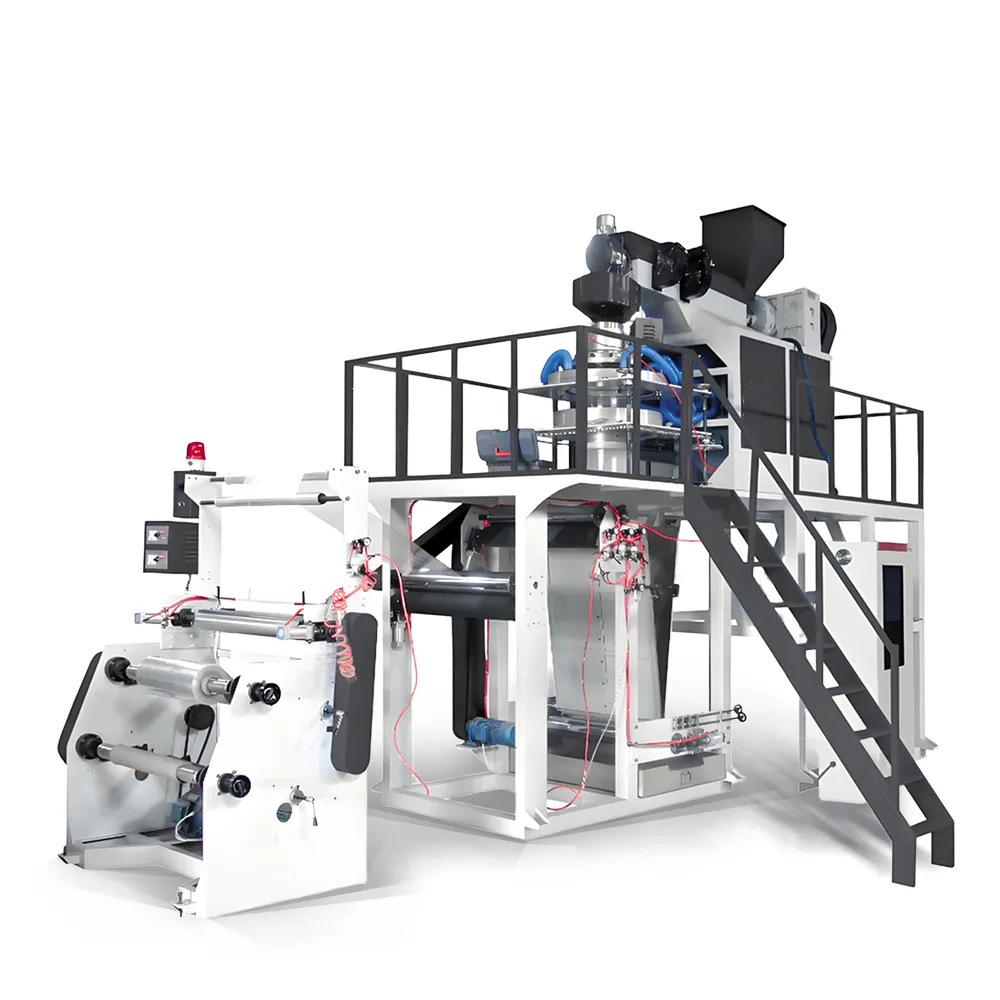
How Film Blowing Machines Work in Agricultural Plastic Film Production
Core Mechanics of the Film Blowing Machine in Plastic Film Production Equipment
Film blowing machines take those little polymer pellets and turn them into long sheets of plastic film by extruding material under control. What happens first? Melted resin gets pushed through what's called a circular die, creating something that looks like a tube shape. Then comes compressed air injection into this hot plastic tube, which makes it puff out into a big bubble expanding sideways as it moves upward at the same time. This stretching along two directions actually lines up all those tiny polymer molecules inside, making the finished product stronger when pulled and clearer to look at too.
The Blown Film Extrusion Process and Its Role in High-Volume Output
Modern blown film extrusion lines achieve production speeds exceeding 500 kg/hour (Plastar 2023) by optimizing material handling and cooling. The continuous bubble method allows precise thickness control (±5 microns) across films up to 20 meters wide. Automated winders convert the stabilized bubble into multi-layer rolls, reducing waste compared to cast film alternatives.
Key Process Variables: Temperature, Pressure, and Die Design in Film Quality Control
| Variable | Mulch Film Range | Greenhouse Film Range | Impact on Properties |
|---|---|---|---|
| Melt Temperature | 180-210°C | 190-230°C | Crystallinity, puncture resistance |
| Blow-Up Ratio | 2:1 to 3:1 | 3:1 to 4:1 | MD/TD strength balance |
| Die Gap | 0.8-1.2mm | 1.5-2.5mm | Thickness uniformity |
Precision gear pumps maintain extrusion pressure within ±2 bar, while multi-zone air rings enable gradual cooling to prevent brittleness. Advanced dies with rotating lips eliminate flow lines—critical for UV-stabilized greenhouse films designed for 10+ year service life.
Agricultural Applications of Mulch and Greenhouse Films
Mulching Films and Their Impact on Crop Yield Enhancement
Mulch films produced via film blowing reduce weed competition by 85% and increase soil temperatures by 3–5°C (Nature, 2023). This thermal regulation accelerates crop maturity by 15–20 days, boosting yields for tomatoes, strawberries, and cash crops. Farmers using UV-stabilized LLDPE mulch report 25–40% higher productivity due to improved root development and reduced evaporation.
Greenhouse Covering Films for Microclimate Regulation and Season Extension
Three-layer co-extruded films provide precise light diffusion (85–92% transmission) and humidity control (±5% RH stability). Designed to endure 180+ annual thermal cycles, they support year-round cultivation of temperature-sensitive crops like bell peppers and orchids. IR-blocking additives cut heating costs by 30% while protecting against frost down to -5°C.
Performance Comparison of PE Mulch Film Types and Functional Properties
| Property | Black PE Mulch | Clear PE Mulch | Silver-Black Mulch |
|---|---|---|---|
| Weed Suppression | 98% effectiveness | 15% effectiveness | 85% effectiveness |
| Soil Warming | +2.5°C average | +4.8°C average | +3.2°C average |
| Degradation Period | 18–24 months | 12–18 months | 24–36 months |
| Key Application | Row crops | Early season planting | Vine crops |
Black mulch dominates vegetable farming (72% market share) due to superior weed control, while silver films are increasingly used in berry cultivation for enhanced anthocyanin production.
Engineering Film Blowing Machines for High-Performance Agricultural Films
Adapting extrusion systems to meet greenhouse film thickness and strength requirements
The latest generation of film blowing equipment relies on multi-layer extrusion techniques to get better results from their operations. When manufacturers tweak those die gaps between 0.8 and 1.5 millimeters while keeping an eye on how fast things cool down, they can hit pretty tight thickness specs around plus or minus 5% for those greenhouse plastic sheets. Most plants go with screws that have this 30 to 1 length diameter ratio because it really helps melt everything properly and mix materials thoroughly, which translates into stronger films that can handle stresses up to about 25 megapascals. All these tweaks mean we're now making films anywhere from 80 to 200 microns thick that stand up against gusts blowing over 60 miles per hour and still stretch out without breaking at around 40% elongation before snapping. Pretty impressive stuff when compared to older models!
Incorporating additive masterbatches for UV resistance and anti-fog functionality
High-performance films require precise dosing of 2–5% UV stabilizers and 1–3% silicone-based anti-fog agents directly into the polymer melt. Co-extrusion allows strategic layering of additives, preserving 92% light transmission while extending service life to five growing seasons. Recent advancements integrate:
- Nanoparticle-based infrared blockers (5–15% energy savings)
- Biodegradation catalysts (<1% concentration)
- Anti-drip surfactants (contact angle <40°)
Precision control and automation in modern film blowing machine operations
PLC systems keep extrusion temps right around ±1°C through those PID algorithms we all know are pretty much mandatory when working with sensitive materials like EVA. The automated bubble calibration stuff actually makes a big difference too. It tweaks both the haul-off speed and manages that internal bubble cooling (IBC) as things happen, which means production lines can run at crazy speeds of up to 300 meters per minute while still keeping thickness variations under control at less than half a percent. And let's not forget about those vision systems integrated into the process. They've got these 5 megapixel cameras scanning for tiny defects at an impressive rate of 120 frames every second. The result? We're seeing roughly 18 percentage points reduction in material waste compared to what happens during traditional manual inspections, though getting these systems properly calibrated takes some trial and error on the factory floor.
Advancing Biodegradable Agricultural Films Through Extrusion Technology
Material Innovations: Biopolymers and Degradation Kinetics in Mulch Films
Today's biodegradable agricultural films are made from materials like polylactic acid (PLA) and various starch blends that typically break down within 12 to 24 months when left in the fields. Working with these materials requires careful fine tuning of the film blowing machines since they tend to form unstable bubbles during production. The main challenge comes from their lower melt strength compared to regular polyethylene, making the extrusion process quite tricky for manufacturers. Some companies have started adding photocatalytic substances to speed up the breakdown process when exposed to sunlight, yet these films still need to hold together with a minimum tensile strength of around 18 MPa throughout most growing seasons. Looking ahead, market research suggests we can expect nearly 10% year over year growth in demand for these eco friendly alternatives, largely because governments across Europe and North America are pushing stricter regulations on plastic waste in agriculture.
Challenges in Scaling Up Biodegradable Film Production While Maintaining Consistency
Expanding production of biodegradable materials comes with its fair share of hurdles. The thermal sensitivity is particularly tight, with only a 3 degree Celsius window for processing compared to 8 degrees for polyethylene. Plus, how these materials break down varies quite a bit depending on what kind of soil they end up in. Some field tests have revealed something interesting too. When PLA films aren't manufactured consistently enough in thickness (about 0.015mm variations), their ability to suppress weeds drops off by around 22% when compared against standard PE films. That's a big difference in performance. Many companies are now turning to multi layer co extrusion techniques as a workaround. Basically, they create products with a biodegradable center but keep fossil based materials on the outer layers. This approach helps maintain necessary durability while still meeting environmental regulations, though it does involve some compromise between green goals and practical needs.
Balancing Demand for Eco-Friendly Films With Current Production Limitations
Most farmers actually want biodegradable mulch films these days, with around 62% expressing preference for them in recent surveys. But here's the catch: only about 38% of producers actually make these options available because they cost significantly more to produce, roughly 24 to 32 percent higher than regular polyethylene films. For smaller manufacturers trying to upgrade their equipment, retrofitting old film blowing lines typically runs into the hundreds of thousands dollars, somewhere around $740k according to Ponemon's 2023 report. That kind of investment just isn't feasible for many small operations. Some companies have turned to oxo-degradable PE films as a stopgap measure while waiting for better alternatives. However, there's still plenty of debate about whether these really break down completely or if they just create microscopic plastic particles instead of fully decomposing into minerals like promised.
Future Trends in Film Blowing Machine Technology and Sustainable Production
Smart manufacturing: IoT and automation in next-generation film blowing machines
These days, IoT sensors paired with AI automation are making a big difference in how film blowing machines monitor quality as things happen. According to a recent look at the industry from 2024, factories using this tech have seen around an 18% drop in production mistakes thanks to features like adjusting thickness on the fly and getting early warnings when something might go wrong (check out the LinkedIn Industry Report for details). Big name manufacturers are connecting their extrusion lines to the cloud now, so they can tweak air pressure settings and cooling processes automatically depending on what the viscosity measurements tell them in real time. It's changing how plants operate day to day.
Energy-efficient extrusion technologies reducing environmental and operational costs
Advanced infrared heating and variable-frequency drives reduce energy consumption by 22–30% compared to traditional systems (Plastics Engineering Journal 2023). Dual-stage air rings improve airflow dynamics, cutting polyethylene waste by 1.2 kg per production hour. These innovations support compliance with the EU's 2030 Climate Target Plan, which requires a 40% reduction in industrial CO₂ emissions.
Global shift toward sustainable agricultural films and market implications
Biodegradable mulch films are expected to see annual growth around 14% all the way through 2030, mainly because of regulations from the EU against single-use plastics. According to recent market analysis for blown films in 2024, roughly two thirds of farmers shopping for these products want UV stabilized options that have built in degradation mechanisms. Many companies making this stuff are now modifying their existing film blowing equipment to handle mixes of PLA and polyethylene while still keeping those critical 3.2 to 1 expansion ratios needed for proper functioning in greenhouses. This balance between sustainability goals and practical requirements remains a big challenge for manufacturers trying to meet both environmental standards and customer expectations at the same time.
FAQ Section
What are the main components of a film blowing machine?
A film blowing machine primarily consists of an extruder, a circular die, a compressor for air injection, cooling systems, and automated winders.
How do mulch films enhance crop yield?
Mulch films reduce weed competition and increase soil temperature, which accelerates crop maturation and boosts the yield.
What challenges exist in producing biodegradable mulch films?
The production of biodegradable mulch films faces challenges such as tight thermal sensitivity, varying degradation rates in different soils, and higher production costs compared to standard films.
What materials are used in biodegradable agricultural films?
Biodegradable agricultural films are made from biopolymers such as polylactic acid (PLA) and starch blends, often enhanced with photocatalytic substances for faster degradation.
Table of Contents
- How Film Blowing Machines Work in Agricultural Plastic Film Production
- Agricultural Applications of Mulch and Greenhouse Films
- Engineering Film Blowing Machines for High-Performance Agricultural Films
- Advancing Biodegradable Agricultural Films Through Extrusion Technology
- Future Trends in Film Blowing Machine Technology and Sustainable Production
- FAQ Section