

 EN
EN

How Double Color Film Blowing Machines Work and Their Advantages in PE Film Manufacturing
What is a double color film blowing machine?
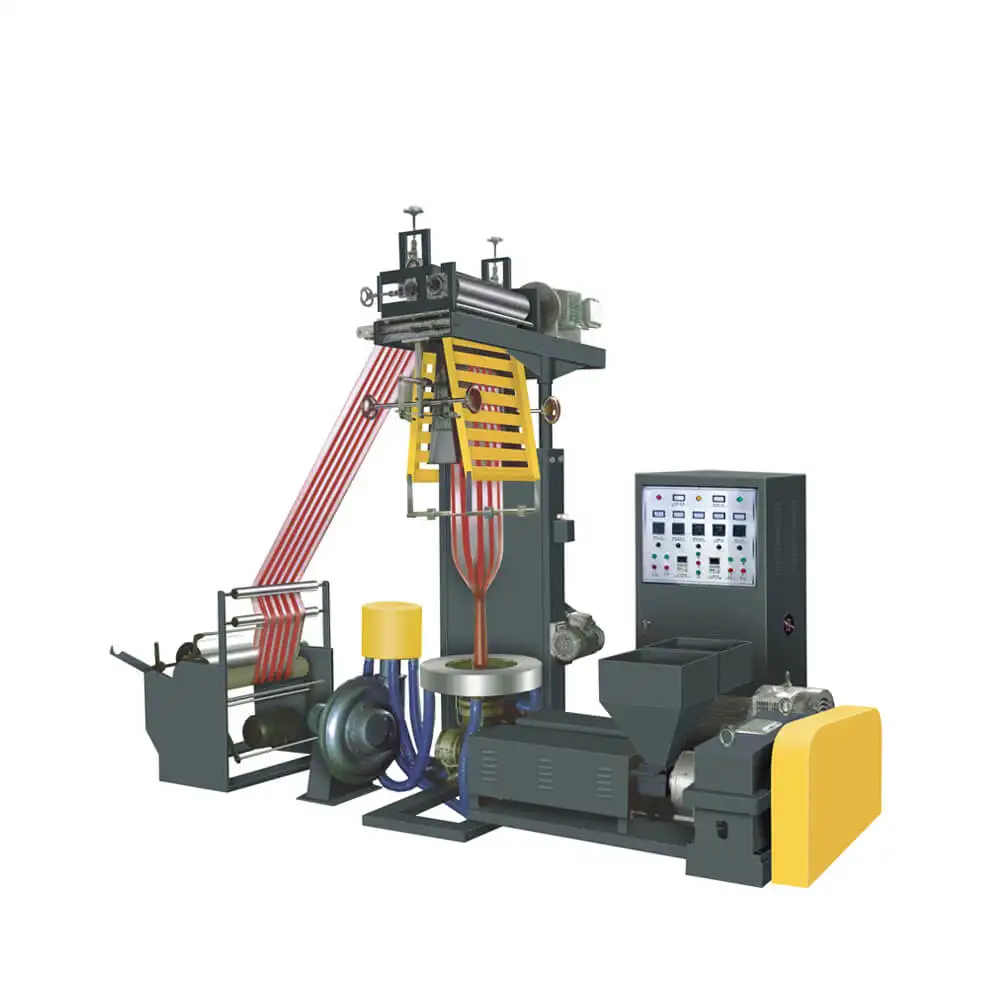
Double color film blowing machines work with co-extrusion tech to make PE films that have two separate layers. Each layer can actually be different when it comes to color, what they're made from, and even their purpose. The setup typically involves multiple extruders melting various types of PE resin like LDPE, HDPE, or sometimes LLDPE. After melting, these materials get pushed together at something called an annular die head where they form one big bubble with two colors visible side by side. What makes this interesting is how manufacturers can create films with special features - think about UV protection on the outside while having really strong tear resistance inside. That's why farmers love them for covering crops and companies use them for all sorts of packaging needs. Today's equipment manages pretty impressive specs too, sticking to around 15 Newtons per 15 millimeters for adhesion strength between layers and keeping thickness differences under 2 percent throughout production runs.
Key Components and Technological Innovations in High-Efficiency Film Blowing Machines
Core construction elements of a blown film machine
The best performing film blowing machines work because they combine several key parts working together. First there's the extruder that melts down the polymer material. Then comes the spiral mandrel die head where the actual bubble starts forming. The machine also needs those special dual lip air rings to cool things down properly, plus a servo driven haul off system to handle the film just right. When all these elements function well together, they keep the bubble stable during production and create films with very consistent thickness - usually within about 5% variation according to what we found in the Film Extrusion Handbook from 2023. Many manufacturers now prefer twin screw extruders since they mix the melted plastic much better. And don't forget about those air rings either. With proper airflow control, operators can avoid those annoying gauge band defects that ruin film quality. Most experienced technicians will tell you that getting these systems balanced correctly makes all the difference in producing high quality output consistently.
Extruder design optimized for LDPE, HDPE, and LLDPE processing
Today's extrusion equipment comes equipped with modular barrel systems and specially designed screw configurations for different kinds of polyethylene materials. When working with linear low density polyethylene (LLDPE), manufacturers typically go for extruders with around a 30:1 length to diameter ratio plus dedicated mixing sections to get even melt distribution. High density polyethylene (HDPE) on the other hand works better with screws that have about 25:1 ratios and shallower flight depths. Keeping temperature under control through several heating zones is crucial too. Most setups aim to maintain melt temps somewhere between 180 and 220 degrees Celsius depending on what kind of material they're running. This range covers the various melt flow index requirements from as low as 0.5 grams per 10 minutes for HDPE up to 5 grams per 10 minutes for LDPE. Proper temperature management makes all the difference in getting consistent output without causing unwanted material breakdown during processing.
Advanced die head engineering for uniform dual-color extrusion
The spiral mandrel die heads featuring around 60 layers in their flow channels can maintain color distribution accuracy within about 2% variation. With dual manifold setups, manufacturers can run multiple colors at once through the same die, and still get interlayer bonds holding at over 300 grams per 25 mm. What really makes these systems stand out though are those dynamic lip adjustments. These components constantly tweak themselves as resins change, so they compensate when viscosity shifts mid-run. This automatic compensation helps keep products looking good on the surface while maintaining solid structural integrity underneath.
Automation systems for precise control of film blowing process parameters
PLCs keep track of around 15 important factors like blow up ratio, frost line height measurements, and bubble diameters, which lets operators make instant changes when needed. The system comes equipped with built in sensors that map out thickness variations down to just 0.1 micrometers. This level of detail means the machine can automatically correct itself to ensure everything stays consistent throughout production runs. When it comes to energy usage, modern servo motors cut electricity costs by about 40 percent compared to older AC drive systems. And they still manage to deliver pretty impressive torque accuracy, staying within plus or minus half a percent most of the time. These advanced control systems can handle production speeds reaching 300 meters per minute while keeping thickness tolerances within roughly 3 percent across films as wide as 2000 millimeters in length.
Optimizing Polyethylene Material Use for Superior Film Quality
Comparative Analysis of PE Types: LDPE, HDPE, and LLDPE in Blown Film Production
The choice of polyethylene grade makes all the difference when it comes to how well films perform in co-extrusion applications. Let's start with LDPE - this material is known for its crystal clear appearance and flexible nature, which explains why it works so well for food packaging where good heat sealing is needed. Then there's HDPE, which stands out because it can handle much greater forces between 18 and 32 MPa, plus it resists chemicals pretty well too. That's why many manufacturers turn to HDPE when they need something tough enough for industrial grade films. And don't forget about LLDPE, a real workhorse that mixes durability with amazing resistance to punctures. Some tests show it can stretch nearly three times its original length before breaking down completely. No wonder this stuff becomes the go to option for things like stretch wrap and other heavy duty packaging solutions that need to withstand rough handling during transport and storage.
Melt Flow Index and Density Considerations in Polyethylene Film Extrusion
The ideal melt flow index (MFI) range for blown film production sits somewhere between 0.5 and 5 grams per 10 minutes. This sweet spot offers good processability while still maintaining adequate mechanical strength in the final product. When it comes to higher density materials above 0.940 grams per cubic centimeter, they actually boost moisture barrier properties compared to regular LDPE by around 25 to 40 percent. But there's a catch these materials need much stricter temperature management during processing to avoid issues with flow instability. Getting the right MFI match for different layer thicknesses makes all the difference. Take for instance when manufacturers use a 1.2 MFI resin for those thin 25 micrometer outer layers. According to research published in the Plastics Technology Journal last year, this approach cuts down on die buildup problems by approximately 18%. The result? Longer machine runtime and better quality control across batches.
Adjusting Extrusion Settings Based on PE Material Properties
Modern film production lines now incorporate real time viscosity monitoring along with infrared measurement tools that help tweak the extrusion process as needed. For HDPE materials, getting the right melt usually means keeping those barrels between around 180 to 230 degrees Celsius. When working with LLDPE though, operators find they need to cool things down about 15 to 20 percent quicker to avoid problems with layers sticking together. The screws used in these machines often feature special mixing sections which really help spread out pigments evenly in those two color films. This results in colors that match pretty consistently throughout different production runs, staying within about half a percent difference most of the time. And when manufacturers combine specific material settings with variable frequency drive technology, they actually cut down on energy usage somewhere around 12 to 15 percent during those resin changeovers. Not only does this save money, but it also helps companies run their operations in a more environmentally friendly way.
Maximizing Output Efficiency and Energy Savings in Blown Film Extrusion
Today's film blowing systems are getting smarter when it comes to balancing productivity with saving energy. Systems now commonly use variable frequency drives along with servo controlled extrusion equipment which can boost output anywhere from 15 to maybe even 20 percent while actually using less electricity overall. Getting the right settings matters a lot too. When manufacturers get the take up ratio and blow up ratio just right around that sweet spot of roughly 1 to 3, they see better molecular alignment and less stress issues during fast production runs of polyethylene. The internal bubble cooling technology makes a big difference compared to old school air rings, cutting down on heat buildup by about forty percent. This is really important for keeping those multi layer films dimensionally stable. For companies working with tough low density polyethylene blends that have melt flow indexes between 0.3 and 2 grams per ten minutes, smart torque control software adjusts speeds automatically so bubbles don't burst when running above 100 meters per minute. All these improvements together save businesses somewhere around eighteen thousand dollars each year per production line according to recent research published in the Plastics Engineering Journal last year. Plus, they allow manufacturers to produce films that are both thinner and stronger because of much better control over individual layers.
By optimizing material flow paths and incorporating adaptive die lips, modern machines sustain film integrity at outputs exceeding 500 kg/h—advantageous for producers targeting high-value specialty films. Real-time monitoring of melt pressure and temperature gradients reduces scrap rates, with automated feedback correcting thickness deviations within ±2%.
Cost-Effective Production and ROI Through Process and Machine Optimization
Reducing material waste with precision layer thickness control
Servo-controlled extrusion systems maintain layer thickness consistency within ±0.02mm, reducing material overuse by 18% compared to analog controls (Plastics Engineering 2023). This level of precision allows manufacturers to meet performance standards while decreasing resin consumption by 1.2—1.5 tons per 100-hour production cycle through closed-loop automation.
Material blending strategies to lower costs without compromising quality
Using gravimetric blending systems makes it possible to mix around 25 to 30 percent recycled polyethylene into high quality films as long as good compatibilizers are included in the process. According to industry reports, this method cuts down on raw material expenses somewhere between $120 and $150 for every ton produced. What's really impressive is that these blended materials still pass the ASTM D882 tensile strength tests which means they meet all necessary performance standards. The bottom line? Manufacturers see about a 15% drop in production costs per unit when switching from purely virgin resins to this recycled blend approach, according to findings published in the Polymer Solutions Journal last year.
Evaluating long-term ROI: Why invest in advanced blown film equipment?
A 2025 analysis of 87 production lines found that manufacturers using IoT-enabled systems achieved 23% faster return on investment due to combined gains in energy efficiency (18–22%), reduced downtime (27%), and improved output consistency. Leading platforms now integrate machine learning algorithms that continuously optimize processing conditions, cutting unplanned stoppages by 40% compared to conventional setups.
FAQ
What is a double color film blowing machine used for?
Double color film blowing machines are used to produce polyethylene films with two separate layers, allowing for different colors, compositions, and functions. These films are ideal for applications requiring unique features, such as UV protection and tear resistance.
What are the key components of high-efficiency film blowing machines?
Key components include the extruder, spiral mandrel die head, dual lip air rings for cooling, and servo driven haul-off system, which all work together to produce consistent and high-quality films.
How does extruder design impact film production?
Extruder design, including modular barrel systems and screw configurations, is optimized for processing different polyethylene materials. Adjusting length to diameter ratios and temperature control ensures consistent output without material breakdown.
How do advanced automation systems aid in the film blowing process?
Advanced automation systems monitor parameters like blow-up ratio and bubble diameter, automatically correcting deviations to maintain consistency while reducing energy costs and improving efficiency.
Why is polyethylene material selection important for film quality?
Different types of polyethylene, such as LDPE, HDPE, and LLDPE, offer unique properties affecting film clarity, strength, and flexibility. Choosing the right material enhances performance for specific applications.
How do machines maximize output efficiency and energy savings?
Modern systems incorporate variable frequency drives and cooling technologies to boost productivity while reducing energy consumption. This leads to cost savings and improved control over film production.
Table of Contents
- How Double Color Film Blowing Machines Work and Their Advantages in PE Film Manufacturing
- Key Components and Technological Innovations in High-Efficiency Film Blowing Machines
- Optimizing Polyethylene Material Use for Superior Film Quality
- Maximizing Output Efficiency and Energy Savings in Blown Film Extrusion
- Cost-Effective Production and ROI Through Process and Machine Optimization
-
FAQ
- What is a double color film blowing machine used for?
- What are the key components of high-efficiency film blowing machines?
- How does extruder design impact film production?
- How do advanced automation systems aid in the film blowing process?
- Why is polyethylene material selection important for film quality?
- How do machines maximize output efficiency and energy savings?