

 EN
EN

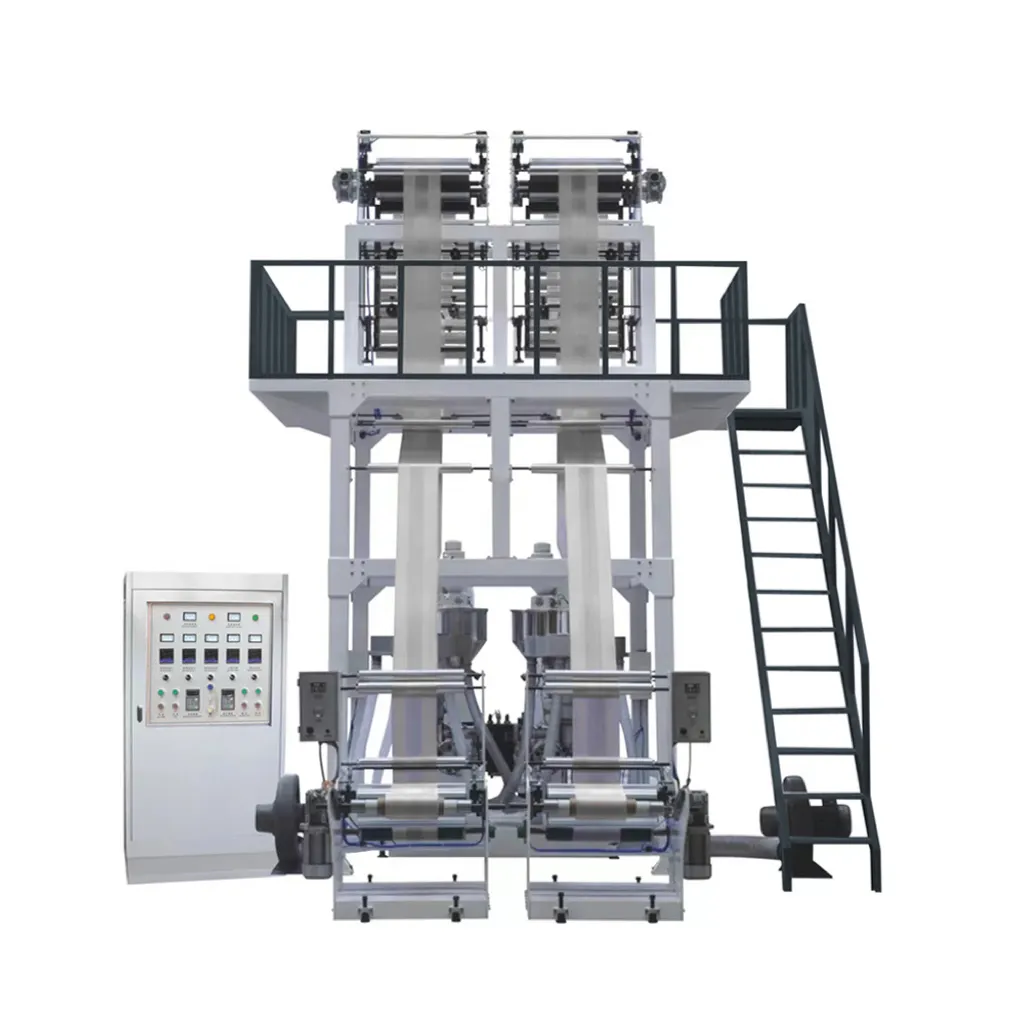
How Double Layer Film Blowing Machine Technology Boosts Production Efficiency
Double layer film blowing machines achieve 18–35% higher output than single-layer systems while maintaining precise material control. This efficiency stems from four key technological advancements working in unison.
Core Mechanics of Multi-Layer Co-Extrusion in Film Blowing Machines
Modern systems extrude two polymer layers simultaneously through separate channels, allowing manufacturers to combine materials like moisture-resistant HDPE with puncture-proof LLDPE. This co-extrusion process reduces production steps while enabling tailored films with enhanced barrier properties—critical for industrial applications requiring both strength and chemical resistance.
Role of Advanced Screw Design and Melt Homogenization for Consistent Output
High-precision screws with graduated compression zones maintain stable melt temperatures (±2°C variance) across both material streams. This prevents layer delamination and ensures uniform thickness, reducing material waste by up to 22% compared to conventional designs (Plastics Engineering Journal 2023).
Large Film Die Head Technology for Uniform Extrusion and Wide Output
| Die Head Feature | Production Benefit |
|---|---|
| 800–1200mm diameter | Enables 3–10m wide films |
| Adaptive lip adjustment | ±5% thickness tolerance |
| Integrated air rings | 40% faster bubble stabilization |
These innovations allow continuous production of agricultural films up to 10 meters wide without sacrificing edge uniformity.
Automation and Process Control Innovations Enhancing Efficiency
Real-time thickness gauges and machine vision systems automatically adjust over 30 parameters, including:
- Melt flow rates
- Cooling air volume
- Take-up speed
Automated control loops maintain production tolerances within 0.005mm, achieving 95% first-pass yield rates in high-speed operations.
Industrial Applications of Double Layer Film Blowing Machines
Producing Heavy-Duty Packaging Films Using LDPE and LLDPE Resins
Double layer film blowing machines work really well when it comes to turning low-density polyethylene (LDPE) and linear low-density polyethylene (LLDPE) resins into tough packaging films. What makes these machines special is their co-extrusion feature which lets manufacturers mix LDPE's nice flexible qualities with LLDPE's ability to resist punctures. This combination creates films that can handle pretty rough treatment during shipping and storage in warehouses and factories. Companies using dual layer setups tend to save around 12 to maybe even 15 percent on materials compared to older single-layer methods. Plus, the thickness stays pretty consistent throughout production, usually varying no more than about 5 percent from one section to another across the whole batch.
High-Tensile Industrial Stretch Films: Performance and Production Benefits
Stretch film machines can reach tensile strengths over 25 MPa thanks to better melt mixing and controlled cooling during production. The two-layer design allows for different surfaces too—smooth inside layers keep loads stable while the outside gets textured for better grip when handling. Manufacturers are seeing production times cut down by around 18 to 22 percent compared with older methods. These machines produce films up to 3.5 meters wide which works great for wrapping pallets in large scale shipping operations across warehouses and distribution centers.
Incorporating EVA and Biodegradable Materials for Sustainable Industrial Films
Advanced systems now process ethylene-vinyl acetate (EVA) and biodegradable polymers like PLA/PBAT blends without compromising speed. By dedicating one layer to biodegradable materials (30–40% of total thickness), films meet industrial strength requirements while achieving 85–90% compostability. Process adjustments maintain melt temperatures below 180°C for heat-sensitive biopolymers, preventing degradation during extrusion.
Resin Blending Strategies to Enhance Mechanical and Barrier Properties
In practice, manufacturers often mix LLDPE with around 5 to 8 percent EVA for the outer layer to get better seals and protect against moisture. They typically include about 3 to 5 percent titanium dioxide in the inner layer too, which helps fight off UV damage when these films are used outside. The whole layered strategy brings down oxygen transmission rates (OTR) to under 150 cc per square meter per day. That's actually about 40 percent better than what we see with regular single material films. The result? Longer shelf life for things like metal components and chemicals that need proper packaging protection.
Agricultural Film Production with Wide-Width Double Layer Systems
The latest generation of double layer film blowing machines has started meeting the growing need for super wide agricultural films that can reach widths of around 10 meters. According to USDA figures from last year, there was nearly a 60% jump in demand specifically for films exceeding 8 meters in width. Farmers are finding these wider sheets incredibly helpful for big operations because they cut down on how long it takes to lay them across fields. Traditional films between 4 and 6 meters meant farmers had to work with multiple pieces, which created extra waste where they overlapped. With the new larger sizes, there's simply less material wasted during installation, making the whole process faster and more efficient for those managing vast farmland areas.
Meeting Demand for Wide Agricultural Films Up to 10 Meters in Width
The transition to mega-greenhouses and automated drip irrigation systems has driven need for seamless, wide-format films. Advanced bubble cooling systems stabilize melt flow across 10-meter dies, achieving thickness variations under ±3%—critical for preventing weak spots in solar greenhouse installations.
Optimizing Thickness and Width Adjustment for Crop-Specific Film Solutions
Operators now tailor films to precise agronomic requirements:
- 80–100 micron strawberry tunnel films with 85% light diffusion
- 200-micron heavy-duty silage films resisting puncture during compaction
- 150-micron mulch films balancing durability and biodegradation rates
Automated gauge adjustment systems enable on-the-fly transitions between these specifications within 15 minutes, compared to 45-minute manual recalibrations in single-layer systems.
Enhancing UV Resistance, Tear Strength, and Durability in Greenhouse Films
Co-extruded layers allow independent optimization:
| Layer Function | Typical Additives | Performance Improvement |
|---|---|---|
| Outer UV Shield | HALS stabilizers, carbon black | 5-year weatherability |
| Inner Reinforcement | Metallocene LLDPE | 40% higher tear resistance |
This architecture enables greenhouse films to maintain 92% tensile strength after 3 years of UV exposure (Agricultural Films Institute, 2023).
Field Performance of Dual-Layer Mulch and Silage Films
Dual-layer mulch films demonstrate 23% higher soil temperature retention versus single-layer versions in maize trials, while co-extruded silage films reduce aerobic spoilage losses from 18% to 6% in haylage storage. The inner sealant layer achieves oxygen transmission rates below 150 cm³/m²/day—crucial for preserving feed nutritional value.
Material Flexibility and Resin Compatibility in Modern Film Blowing Machines
Modern film blowing machines achieve unprecedented material versatility, processing resins ranging from standard polyethylenes to advanced biodegradable polymers. This flexibility enables manufacturers to produce films tailored for industrial durability or environmental sustainability without costly equipment changes.
Processing Diverse Resins: PE, LDPE, LLDPE, EVA, and Biodegradable Polymers
Contemporary machines handle five primary resin categories with distinct processing requirements:
| Resin Type | Melt Flow Index (g/10min) | Key Properties | Common Applications |
|---|---|---|---|
| LDPE | 0.3–50 | High flexibility, clarity | Agricultural mulch, shrink wrap |
| LLDPE | 0.5–10 | Superior puncture resistance | Industrial stretch films |
| EVA | 1.5–40 | Enhanced adhesion, low-temperature sealing | Solar panel encapsulation |
| PLA (Bio-based) | 3–15 | Compostable, moderate barrier | Food packaging, disposable bags |
According to the 2023 Polymer Compatibility Report, newer models can process bio-based PLA resins at speeds matching conventional PE films when optimized for temperature profiles between 160–190°C.
Challenges in Handling High-Viscosity and Heat-Sensitive Biopolymers
Processing specialty resins like PVOH (water-soluble polymers) requires precise viscosity control, with screw speeds reduced by 30–40% compared to LLDPE extrusion. Heat-sensitive materials demand ±1°C temperature stability across all barrels to prevent degradation—a feat achieved through segmented heating zones and real-time viscometers.
Balancing Material Performance with Machine Compatibility
Operators must reconcile resin characteristics with equipment capabilities:
- High-MFI resins (≥25 g/10min) require restricted die gaps to maintain bubble stability
- Low-density bio-polymers need 15–20% faster cooling rates to prevent film sagging
- Co-extrusion adhesives demand screw L/D ratios ≥30:1 for proper mixing
Advanced control systems automatically adjust parameters based on resin databases, reducing setup time by 45% when switching materials (Polymer Processing Institute 2023).
Choosing the Right Double Layer Film Blowing Machine for Your Needs
When choosing a double layer film blowing machine, manufacturers need to find that sweet spot between specs and what actually works on the factory floor. The machines have to handle all sorts of stuff - low-density polyethylene, linear low-density PE, even those newer biodegradable options - while still producing good quality film every time. Output width matters too, especially for bigger agricultural projects where widths can reach up to 10 meters. Material compatibility is another big factor, along with how fast the system can churn out product. What makes things tricky is switching back and forth between heavy-duty industrial packaging films and those special UV resistant versions needed for farming applications. A good machine should handle these changes quickly without slowing down the whole production line.
Key Selection Criteria for Industrial and Agricultural Hybrid Applications
When looking at equipment options, give priority to machines equipped with modular die heads since they allow much faster switching between different film materials and widths. Take time to assess various screw designs too. Some newer configurations handle thick resins better while using less electricity overall. Research published last year indicated that certain advanced screw shapes can cut down on power requirements somewhere around 18 to maybe even 22 percent according to the Plastics Engineering Journal. If running hybrid production lines, look for systems that maintain roughly plus or minus 2 percent consistency in layer thickness. This kind of precision matters a lot when making products like silage wrap and industrial shrink film where consistent barrier protection is absolutely critical.
Evaluating Energy Efficiency, Automation Level, and After-Sales Support
Using energy efficient drives along with heat recovery systems cuts down on running expenses somewhere around 30 percent. At the same time, smart automation powered by IoT helps cut material waste because it monitors thickness in real time. Big name manufacturers are starting to implement these predictive maintenance features too. These systems send out alerts before equipment fails, cutting unexpected shutdowns by about 40 according to last year's Industry 4.0 report. What many people overlook is that after sales service matters just as much as specs sheet numbers. Most film makers care deeply about this aspect actually. Around three quarters of them look for suppliers who provide thorough training programs plus quick access to replacement parts when needed, ideally getting those parts within three days or so.
Future Trends: Transitioning from Double to Triple-Layer Systems Without Speed Loss
The latest developments have made it possible to create three-layer films that are 30% thinner yet still hold the same tensile strength as before. This is really important because it cuts down on material expenses for those big scale agricultural operations. These days, most modern extrusion equipment accomplishes this feat using smart AI controlled melt pumps which keep the production lines running at speeds over 150 meters per minute even when switching between layers. A lot of manufacturers these days are going for what they call upgradable two-layer systems. About 60% or so actually build their machines so they can later add a third extruder module without tearing everything apart and starting from scratch. This approach saves money on equipment replacement costs while letting them expand what their production lines can do as needed.
FAQs About Double Layer Film Blowing Machines
What are the primary advantages of using double layer film blowing machines?
Double layer film blowing machines offer increased production efficiency, material versatility, and improved film properties such as puncture resistance and barrier performance.
How does co-extrusion benefit film production?
Co-extrusion allows for the combination of different polymer layers, enhancing properties like moisture resistance and strength, while reducing production steps.
Can these machines process biodegradable materials?
Yes, modern machines can process biodegradable polymers like PLA and PBAT, enabling the production of sustainable films without compromising industrial strength.
What should be considered when selecting a film blowing machine?
Key considerations include material compatibility, production capacity, automation levels, energy efficiency, and after-sales support to ensure optimal performance and adaptability.
Table of Contents
- How Double Layer Film Blowing Machine Technology Boosts Production Efficiency
- Industrial Applications of Double Layer Film Blowing Machines
- Agricultural Film Production with Wide-Width Double Layer Systems
- Material Flexibility and Resin Compatibility in Modern Film Blowing Machines
- Choosing the Right Double Layer Film Blowing Machine for Your Needs
- FAQs About Double Layer Film Blowing Machines