

 EN
EN

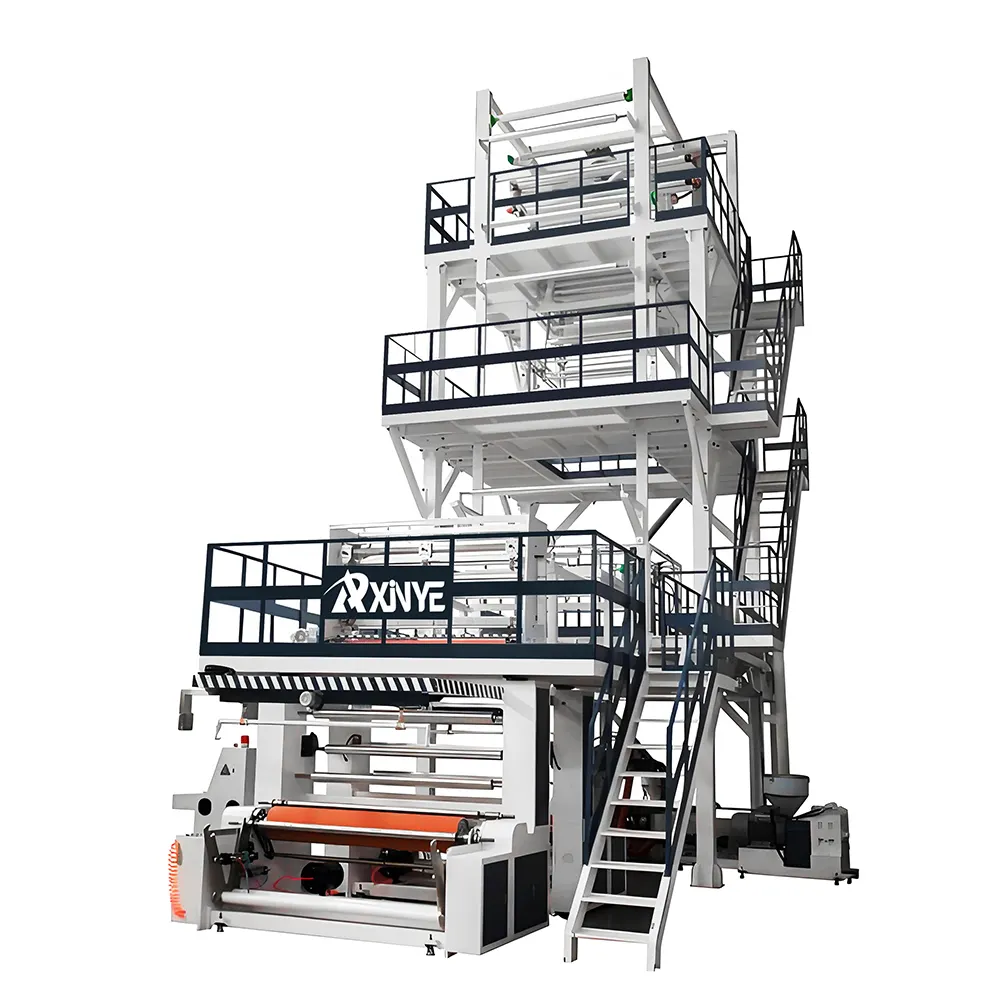
Core Principle of Film Blowing Machines: Closed-Loop Feedback for Real-Time Thickness Correction
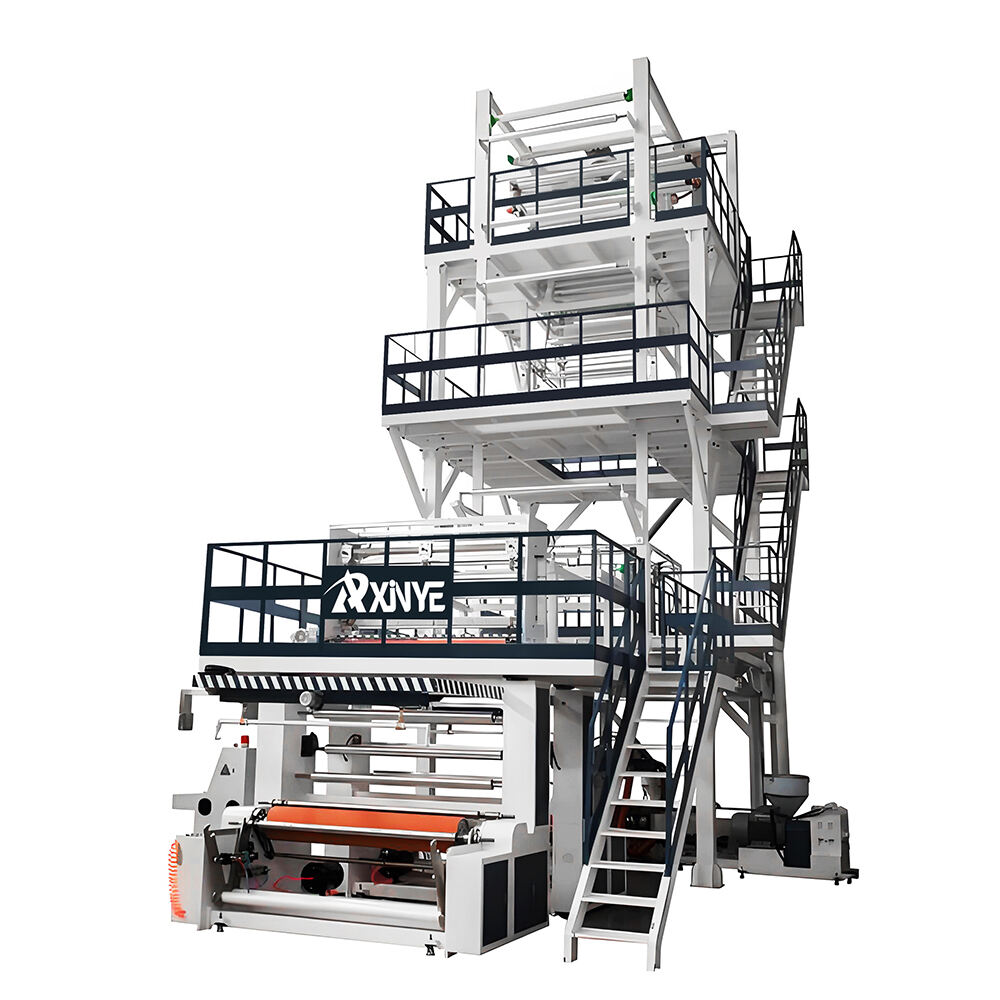
At the heart of precision in film blowing machines lies the closed-loop feedback system—a dynamic process where thickness measurements directly trigger corrective actions. This continuous cycle of monitoring and adjustment eliminates human guesswork while responding to production variables like material viscosity fluctuations or temperature drifts within milliseconds.
How infrared and β-ray sensors enable continuous inline measurement of bubble and flat film
Infrared sensors work by looking at how different wavelengths get absorbed as light goes through moving film material. They tend to perform really well with clear plastics since they don't involve ionizing radiation which makes them safer for certain applications. On the other hand, beta ray sensors rely on low level radioactive sources like Krypton 85 to measure how much material blocks the radiation path. These can actually see through multiple layers or colored materials where regular optical methods struggle. Both types of sensors are capable of scanning rotating bubbles and flat sheets with thousands of measurements every second, picking up tiny differences in thickness across the entire width of the film. The high resolution thermal maps produced by these systems help spot areas where the film gets too thin near the edges or builds up excessively at the seams, turning physical characteristics into detailed digital representations of actual thickness variations throughout the production process.
Why closed-loop control is essential for uniformity—linking sensor data to actuator response
Open loop systems work with fixed settings that don't adjust to what's happening right now, which can lead to thickness problems sometimes going over 15% off target when things get shaky. Closed loop control fixes this issue because it takes information from sensors and turns them into actions for the machines almost immediately. If there's a spot that's too thin, the system will heat up just that part of the die lip, and at the same time, it adjusts how much cool air comes through the rings around the product. This connection between data and action cuts down on thickness differences to less than 3%, and saves anywhere from 20% to 30% in wasted materials. Keeping everything balanced during extrusion means less energy gets used for each kilogram produced, plus products come out consistently good quality time after time.
Sensor Deployment: Optimizing Position, Accuracy, and Stability Around the Bubble
Infrared vs. β-ray: Trade-offs in resolution, penetration depth, and suitability for different polymer types
Selecting the optimal thickness sensor requires evaluating core performance trade-offs:
- Infrared sensors deliver high resolution (±0.5 μm) ideal for thin, transparent films but struggle with opaque or pigmented polymers due to light absorption limits—and offer non-contact operation with minimal mechanical interference.
- β-ray sensors penetrate thicker materials (up to 1,000 g/m²) and handle filled or metallized compounds effectively, yet achieve lower resolution (±1.0 μm) and require regulatory licensing for radioactive sources.
Material properties dictate suitability: Infrared works best for polyethylene terephthalate (PET) and polypropylene (PP) films under 200 μm; β-ray outperforms with high-density polyethylene (HDPE) and metallized layers. A 2023 ASTM study confirmed β-ray maintains ±0.1% accuracy across density variations—critical for multi-layer extrusion.
Mitigating signal noise from melt instability—calibration, averaging algorithms, and thermal shielding
Process fluctuations introduce thickness measurement errors. Three proven strategies counteract this:
- Dynamic calibration against master samples every four hours compensates for sensor drift.
- Rolling-average algorithms smooth data by processing 100+ scans per second, rejecting transient anomalies.
- Active thermal shielding holds sensors at 25°C ± 2°C, preventing bubble heat from distorting dielectric constant readings.
Field studies show these measures reduce thickness variability by 34% in high-output operations, directly lowering material waste.
Actuation and Integration: How Film Blowing Machines Dynamically Adjust Based on Sensor Input
Coordinating air ring airflow, die lip adjustment, and extruder output to correct thickness profiles
Today's film blowing equipment can correct thickness issues as they happen by responding quickly to what the sensors pick up. When those infrared or beta ray sensors notice something off about the bubble shape or flat film dimensions, the machine springs into action all at once across three main areas. First, the air ring adjusts how much cool air comes out to keep things stable around the bubble. Then there are the die lips which actually change the space between them to send more material where it's needed most. And finally, the extruder tweaks how much melted plastic gets pushed through based on what specs need to be hit. All this happens super fast, usually within a few thousandths of a second, so the machine keeps compensating even when conditions shift slightly like when temperatures drop or the plastic gets thicker unexpectedly. Manufacturers who tie everything together instead of letting each part work separately manage to keep thickness differences under plus or minus 3 percent. That means less wasted material overall and fewer times workers have to jump in and fix problems manually. Putting together fast computer processing with good old fashioned mechanical parts turns those basic sensor signals into consistently accurate film widths throughout the whole production run.
Tangible Benefits: Scrap Reduction, Energy Efficiency, and Process Consistency in Film Blowing Machines
Automatic thickness control systems bring real value to operations on multiple fronts. For starters, these systems catch problems early enough to slash material waste significantly - some facilities report cutting waste by around 20% when they spot thickness issues before defects form, which obviously brings down those expensive scrap costs. Then there's the energy side of things. When extrusion parameters get properly optimized, the difference is striking. Servo motors paired with precise controls tend to use about half the power that older systems consume. And let's not forget about product consistency. Film quality stays stable throughout production runs, so factories experience far fewer stoppages and end up rejecting much fewer batches overall. All told, companies adopting this technology see better environmental performance while maintaining strong competitive positioning thanks to their ability to manufacture consistently at lower costs.
FAQ
What are the main types of sensors used in film blowing machines?
The main types of sensors used are infrared sensors and beta-ray sensors. Infrared sensors are suitable for clear plastics and non-contact operations, while beta-ray sensors are effective for thicker or colored materials.
How does closed-loop feedback improve film thickness correction?
Closed-loop feedback allows real-time thickness adjustments by linking sensor data to machine actions, reducing thickness variance to less than 3% and decreasing material waste by 20% to 30%.
What are the benefits of automatic thickness control systems?
Automatic thickness control systems reduce material waste, improve energy efficiency by optimizing extrusion parameters, and maintain product consistency throughout production runs.
Table of Contents
- Core Principle of Film Blowing Machines: Closed-Loop Feedback for Real-Time Thickness Correction
- Sensor Deployment: Optimizing Position, Accuracy, and Stability Around the Bubble
- Actuation and Integration: How Film Blowing Machines Dynamically Adjust Based on Sensor Input
- Tangible Benefits: Scrap Reduction, Energy Efficiency, and Process Consistency in Film Blowing Machines
- FAQ