

 EN
EN

What Is Film Bubble Stability—and Why It Directly Controls Width and Gauge Uniformity
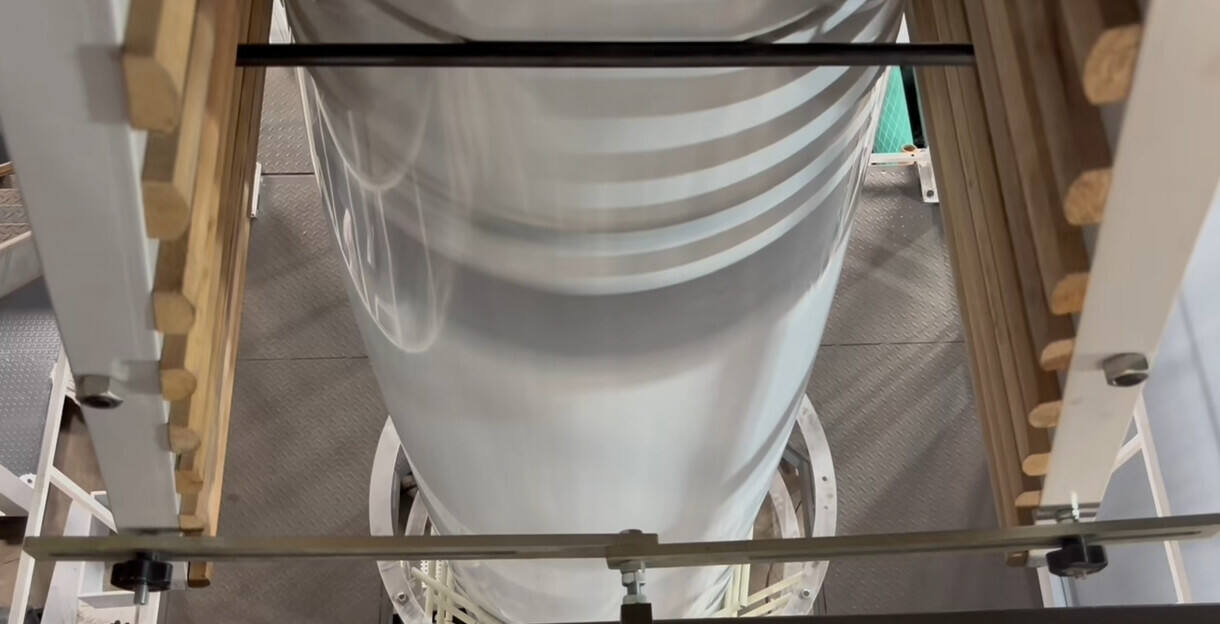
Film bubble stability refers to the consistent formation and maintenance of the polymer bubble during blown film extrusion. This stability directly governs film width consistency and gauge uniformity by preventing asymmetric cooling, thickness variations, and material defects.
The Physics of Bubble Instability: From Melt Elasticity to Radial Oscillations
Melt elasticity—the polymer’s resistance to deformation—drives radial oscillations when cooling airflow or temperature gradients become uneven. These oscillations amplify as the bubble ascends, causing diameter fluctuations exceeding ±8% in industrial extrusion environments. Key instability drivers include:
- Non-uniform die swell from inconsistent melt temperatures
- Resonance between airflow turbulence and polymer relaxation times
- Viscoelastic stress recovery at the frost line height
Real-World Impact: Linking Bubble Drift and Collapse to ±5–10% Gauge Bandwidth and Width Spread
Unstable bubbles directly manifest as measurable production defects:
- Gauge variation: ±5–10% thickness deviations across film rolls
- Width inconsistency: Edge weave exceeding 3% of target width
- Material waste: Up to 15% scrap rates from bubble collapse events
Bubble drift correlates strongly with cooling asymmetry—a 1°C radial temperature differential increases gauge variation by 7% in polyolefin films. This forces downstream compensation through excessive trim waste or product downgrading.
Air Ring Design and Calibration: The Most Effective Leverage Point for Film Bubble Stability
Precision air ring design directly governs film bubble stability by controlling the critical cooling phase. Asymmetric airflow induces radial temperature gradients, causing bubble drift and gauge variations exceeding ±5% in industrial settings.
Multi-Zone Adjustable Air Rings: Enabling Dynamic Bubble Centering and Frost Line Stabilization
The latest generation of these systems incorporates segmented air chambers equipped with their own flow control mechanisms. When operating these machines, technicians can fine tune the cooling intensity throughout anywhere from 8 to 12 different radial sections. This allows them to respond quickly when bubbles start drifting off course during production runs. The immediate adjustments help keep the bubble aligned with the center of the die while also keeping the frost line steady. As a result, manufacturers report around a 40 percent reduction in thickness variations compared to older single zone setups. For tricky materials such as LLDPE, adding dual lip configurations makes all the difference. These special designs create small controlled air pockets within the system that actually absorb and reduce those annoying oscillations that plague many polymer processing operations.
Airflow Profiling Best Practice: Achieving <±3% Radial Velocity Uniformity to Suppress Asymmetric Cooling
The calibration process needs something called laser Doppler anemometry mapping just to check if the air is flowing evenly around the circumference. Special screens that cut down turbulence plus those carefully shaped lips on equipment help keep velocity differences under 3%, which matters a lot because otherwise we get these annoying hot spots leading to spiral-like thickness issues in materials. When manufacturers stick to these tight tolerances, they actually see about a 60% drop in width variation across products, while keeping film thickness pretty stable within roughly plus or minus 1.5%. And don't forget regular checks using a profilometer right where the frost line sits, since this kind of maintenance really makes sure everything keeps performing well over time.
Process Parameter Synergy: How BUR, DDR, Melt Temperature, and Die Pressure Jointly Influence Film Bubble Stability
Achieving stable film bubble dynamics requires precisely balancing four interdependent parameters: Blow-Up Ratio (BUR), Draw-Down Ratio (DDR), melt temperature, and die pressure.
The Bubble to Die Ratio, or BUR for short, basically determines how much the material stretches sideways during processing and has a direct effect on the thickness distribution across the film. When this ratio goes beyond what's considered safe limits, usually around 4 to 1 in polyethylene applications, problems start showing up like sagging sections and those annoying spiral shaped vibrations. On the other hand there's the Draw Down Ratio, known as DDR, which deals with how fast the material is pulled away compared to when it leaves the die. If the DDR gets too high while the BUR stays low at the same time, we tend to see something called neck-in distortion happen along with about plus or minus seven percent variations in thickness throughout the product.
The melt temperature basically controls how the material flows during processing. When it gets more than about 5 degrees above what's ideal, the melt strength drops off quickly and bubbles start moving around faster than they should. On the flip side, if cooling isn't quite right, we end up with temperature differences across different parts of the material. Pressure changes in the die that go beyond plus or minus 3% from where they're supposed to be cause all sorts of problems too. The flow becomes unstable and messes with the frost line formation. What makes this tricky is that these factors don't work independently. For instance, when we increase the BUR (burst rate), we need to adjust DDR settings proportionally and compensate through active cooling just to keep things stable. Getting all these elements working together properly helps eliminate those annoying resonant instabilities. Most importantly, good synchronization leads to better results with width variations staying under 3% and much more consistent gauge throughout the product.
Bubble Cage and Web Tension Management: Preventing Resonant Drift Without Inducing New Instabilities
Stabilizing film bubbles during blown film extrusion really depends on good bubble cages and proper tension control systems. When these aren't set up right, they actually create more problems than solutions. Something called resonant drift happens where those tiny vibrations get bigger and bigger, making the bubble wobble around. This can lead to gauge variations of about plus or minus 8% if left unchecked. On the flip side, if the cages are too tight, they push too much radial tension through the material, especially noticeable when working with blow-up ratios above 2.5 to 1. Finding that sweet spot between enough tension to keep things stable but not so much that it stresses the material out is tricky business. Too much stress concentration will eventually cause those annoying circumferential buckles everyone wants to avoid in production runs.
The Tension-Stability Tradeoff: Why Over-Constrained Caging Triggers Oscillation at Critical Blow-Up Ratios
When there's too much pressure on the cage, it messes up how the bubble forms, making it lopsided and causing stress spots in certain areas. Once we hit those important BUR levels (usually around 3 to 1 ratio for LDPE materials), these stress points start vibrating and send waves running through the molten plastic curtain. These vibrations show up as visible bands or what folks in the industry call chatter marks on the finished film. To fix this problem, manufacturers need to constantly adjust the cage rollers while production is happening, keeping the tension differences below about 5% all around the bubble. Most modern plants use closed loop controls that match cage pressure adjustments with how thick or thin the melt gets during processing. This helps avoid situations where things get too tight and everything falls apart when operating at higher BUR ratios.
Key balance principles:
- Maintain web tension between 0.8–1.2 N/mm² to suppress drift
- Limit cage contact points to ≤6 zones for uniform stress distribution
- Monitor vibration frequencies above 15 Hz as instability precursors
FAQ
What is film bubble stability?
Film bubble stability refers to the consistent formation and maintenance of a polymer bubble during blown film extrusion, which is crucial for achieving uniform film width and gauge.
How does air ring design influence bubble stability?
Precision air ring design controls the critical cooling phase during extrusion, helping to minimize radial temperature gradients that could otherwise lead to unstable film bubbles.
What is the impact of process parameters like BUR and DDR on bubble stability?
Parameters such as Blow-Up Ratio (BUR) and Draw-Down Ratio (DDR) directly affect how the polymer is stretched and pulled, influencing the final width and thickness consistency of the film.
Why is tension management important in film extrusion?
Proper tension management is essential to prevent resonant drift, which can lead to inconsistencies in film thickness and width during production.
Table of Contents
- What Is Film Bubble Stability—and Why It Directly Controls Width and Gauge Uniformity
- Air Ring Design and Calibration: The Most Effective Leverage Point for Film Bubble Stability
- Process Parameter Synergy: How BUR, DDR, Melt Temperature, and Die Pressure Jointly Influence Film Bubble Stability
- Bubble Cage and Web Tension Management: Preventing Resonant Drift Without Inducing New Instabilities
- FAQ