

 EN
EN

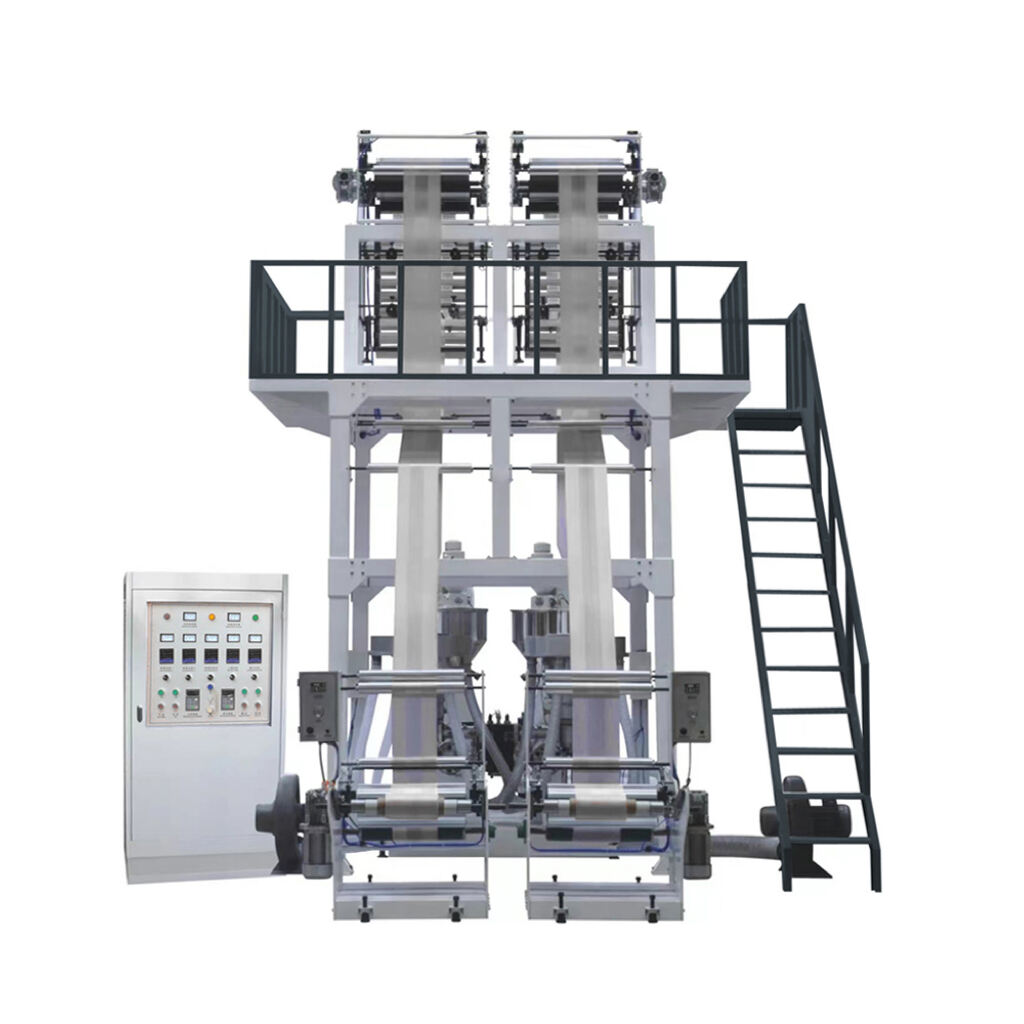
Production Capacity and Operational Efficiency: Twin Head vs Single Head Film Blowing Machines
Throughput, Line Speed, and Uptime: Quantifying Real-World Output Gains
Twin head film blowing machines typically produce about 30 to 50 percent more material compared to their single head counterparts because they allow for two extrusions at once. This basically doubles production capacity without needing twice as much factory space or additional production lines. Most twin head systems can run at around 100 to 150 meters per minute, which beats the 60 to 100 meter range that's common for single head machines according to industry standards. But there's a catch here though. These machines need constant attention since proper die alignment matters a lot and keeping bubbles stable during operation is critical. If something goes wrong and the machine stops unexpectedly, it can actually cut down those extra gains by roughly 15%. Real world data from companies making large quantities of HDPE and LDPE shows that twin head configurations tend to boost yearly output by approximately 25%, but only when experienced workers keep the equipment running over 90% of the time. This level of performance requires regular maintenance checks and monitoring systems that watch production parameters in real time.
Energy Use and Labor Requirements per Kilogram of Film
At scale, twin head machines reduce energy consumption by 15–25% per kilogram of film—primarily by consolidating auxiliary systems (e.g., shared chillers, centralized control logic) and optimizing extruder load distribution. Labor requirements, however, follow a volume-dependent curve:
| Operational Factor | Twin Head Advantage | Single Head Advantage |
|---|---|---|
| Energy per kg (volume) | 20% reduction 1,000 kg/hr | — |
| Labor per kg (small batch) | — | 30% faster changeovers |
| Operator skill level | Advanced technical training | Standardized procedures |
When dealing with continuous operations above 500 kg per hour, going with twin head setups really makes sense for saving on both energy costs and manpower. On the flip side, single head units cut down on the hassle factor when it comes to changing over between batches. That's why they're so valuable in plants where product grades keep switching, there are lots of short production runs happening, or during research and development testing phases. At the end of the day, plant managers need to weigh those actual energy savings numbers against what their budget can handle for hiring skilled technicians who know how to operate these systems properly.
Total Cost of Ownership and ROI Analysis for Twin Head vs Single Head Film Blowing Machines
Upfront Investment, Maintenance Frequency, and Spare Parts Availability
The upfront cost for twin head systems runs about 20 to 30 percent higher than single heads. Industrial quality units typically fall somewhere between half a million dollars and two million bucks, depending largely on how much output they need to handle and what level of automation comes standard. The good news though? These systems have this modular design advantage. When running parallel extrusions, each individual extruder doesn't get worn down as fast, so maintenance intervals stretch out by around 15 to maybe even 25 percent in practice. Getting replacement parts isn't too bad either since most major manufacturers stick with similar standards across their product lines. But there's definitely a catch worth mentioning here. Twin head machines generally need about 35 percent more heating components plus those specially machined die plates that are absolutely essential for keeping the melt flowing evenly and ensuring those bubbles form correctly during production.
5-Year TCO Comparison: Depreciation, Downtime Costs, and Yield Optimization
Over a five-year horizon, twin head machines consistently achieve lower cost-per-kilogram—even with higher capital outlay—driven by yield, uptime, and waste reduction. Key differentiators include:
| Factor | Single Head | Twin Head |
|---|---|---|
| Annual Downtime Costs | $120k | $65k |
| Material Waste Rate | 8.5% | 4.2% |
| Yield Improvement | Baseline | +22% |
When we look at integrated thickness control systems, product changeovers that happen 40 to 60 percent faster, plus needing fewer operators overall, these improvements together save about $740,000 in operating costs over five years according to Ponemon's research from 2023. For plants that run around 2,500 hours or more each year, this kind of investment typically pays off within 18 to 36 months. On the flip side, single head machines still make good financial sense for smaller operations running less than 1,000 hours per year. The reason? Flexibility matters more here than sheer volume efficiency. These setups require less staff time and can be reconfigured quickly when production needs shift, which often balances out against the economies of scale seen in larger operations.
Application Fit: Aligning Machine Configuration with Production Volume and Flexibility Needs
Selecting between twin head and single head film blowing machines hinges on strategic alignment—not just with current output targets, but with material strategy, changeover frequency, and workforce capability.
Single Head Advantages for Low-Volume, Multi-Grade, or R&D-Focused Operations
Single head configurations excel where agility matters more than absolute output. They are the pragmatic standard for:
- Low-volume runs, minimizing start-up waste and reducing scrap during grade transitions;
- Multi-grade experimentation, enabling rapid resin swaps and quick calibration for prototyping new formulations;
- R&D adaptability, offering simplified thermal profiling and intuitive control interfaces ideal for testing novel additives or biopolymer blends.
With 30–50% lower setup costs and minimal training overhead, single head machines reduce time-to-trial and accelerate innovation cycles—making them essential for converters serving specialty markets or developing next-generation packaging solutions.
Twin Head Superiority in High-Volume HDPE, LDPE, and LLDPE Film Manufacturing
Twin head systems dominate commodity film production—particularly for HDPE, LDPE, and LLDPE at rates exceeding 2,000 kg/hour. Their structural advantages compound at scale:
- Continuous operation: One extrusion head sustains production while the other undergoes die cleaning or minor servicing—eliminating full-line stoppages;
- Throughput optimization: Parallel extrusion cuts cycle times by 25–40%, especially beneficial in multi-layer coextrusion or high-speed printing-grade film lines;
- Bubble stability: Synchronized airflow and IBC integration suppress gauge variation across wide-web films (≥2.5 m), improving roll uniformity and downstream converting performance.
Operators routinely achieve 98%+ uptime on 24/7 shifts—validating the higher capital investment through volume-driven economies of scale, consistent quality, and predictable capacity planning.
Film Quality and Process Control Implications of Twin Head vs Single Head Configurations
Gauge Uniformity, Bubble Stability, and Die Alignment Consistency Across Configurations
The foundation of good film quality actually starts way before production begins, right at the point where melt gets delivered consistently through the die while maintaining stable bubble dynamics during processing. Twin head machines offer better gauge uniformity around plus or minus 2%, mainly because they separate control of melt temperature from pressure settings in each of their two distinct extrusion areas. This helps reduce those frustrating inconsistencies between batches, something that matters a lot when working with materials like HDPE and LLDPE which have very specific requirements for molecular weight distribution and need careful temperature control. Manufacturers also benefit from integrated internal bubble cooling systems these days. These IBC setups really stabilize things during production, cutting down on thickness variations caused by unpredictable air movement patterns by roughly 40% compared to older single head models on the market.
Die alignment presents another key divergence: twin head systems use synchronized calibration mechanisms that actively compensate for thermal drift between barrels, preserving concentricity over extended runs. Single head units rely on manual recalibration every 8–12 hours—a necessary but labor-intensive safeguard against differential expansion and resulting gauge bands.
Together, these process control advantages translate directly to quality outcomes: twin head configurations reduce defect rates by 15–30% in high-output environments, supporting tighter specification compliance, fewer customer rejections, and stronger brand assurance for premium film applications.
FAQ Section
What is the primary advantage of twin head film blowing machines?
The primary advantage of twin head film blowing machines is their ability to produce 30 to 50 percent more material compared to single head counterparts, effectively doubling production capacity without doubling the factory space or production lines required.
How do twin head machines impact energy consumption and labor requirements?
Twin head machines reduce energy consumption by 15–25% per kilogram of film at scale, mainly via consolidated auxiliary systems and optimized extruder load distribution. However, they require highly skilled operators for effective performance.
In what scenarios are single head film blowing machines more beneficial?
Single head film blowing machines are more beneficial in scenarios requiring frequent changeovers between batches, where flexibility in production is needed, such as low-volume operations, multi-grade experimentation, or R&D-focused processes.
Table of Contents
- Production Capacity and Operational Efficiency: Twin Head vs Single Head Film Blowing Machines
- Total Cost of Ownership and ROI Analysis for Twin Head vs Single Head Film Blowing Machines
- Application Fit: Aligning Machine Configuration with Production Volume and Flexibility Needs
- Film Quality and Process Control Implications of Twin Head vs Single Head Configurations
- FAQ Section