

 EN
EN

Barrier Performance Optimization Through Strategic Layer Design
Oxygen and Moisture Barrier Gains in 5- vs. 7-Layer Configurations
How layers are arranged in packaging materials really affects how well they block out unwanted elements. According to recent industry research published in Packaging Digest last year, seven layer films cut down on oxygen getting through by around 40 to 60 percent compared to their five layer counterparts. They also stop moisture from passing through about 25 to 35 percent better. What makes this possible? Special barrier layers sandwiched between matching tie layers form these complicated winding paths that slow down what gets through. With this extra control over structure, manufacturers can put those special polymers exactly where they need them. Take EVOH for stopping oxygen or PA for managing carbon dioxide levels in packages that modify the atmosphere inside. This kind of precise engineering matters a lot when companies want their products to stay fresh longer.
EVOH and Polyamide Functional Layers: Targeted Contaminant Exclusion Mechanisms
When it comes to barrier properties, ethylene vinyl alcohol (EVOH) and polyamide (PA) work hand in glove. EVOH has this really tight ethylene-rich structure that keeps out those tiny non-polar molecules such as oxygen, which measures around 3.86 angstroms. This gives it oxygen transmission rates (OTR) that stay well below 1 cc per square meter per day. On the other side of things, polyamide does something different but equally important. Its crystalline structure makes it great at pushing back against water vapor while still letting certain gases pass through selectively. The moisture vapor transmission rate (MVTR) stays under 1 gram per square meter per day. These two materials combined hit all the tough standards required for things like medicines and foods that need long shelf lives. Manufacturers use coextrusion techniques to make sure these layers stick together properly. They engineer special tie layers between them so there's no risk of the materials separating either when making products or later on when they're actually used.
Mechanical Robustness: How Co-Extrusion and Biaxial Orientation Elevate Strength
Bubble Inflation Dynamics and Biaxial Orientation Effects on Tensile & Puncture Resistance
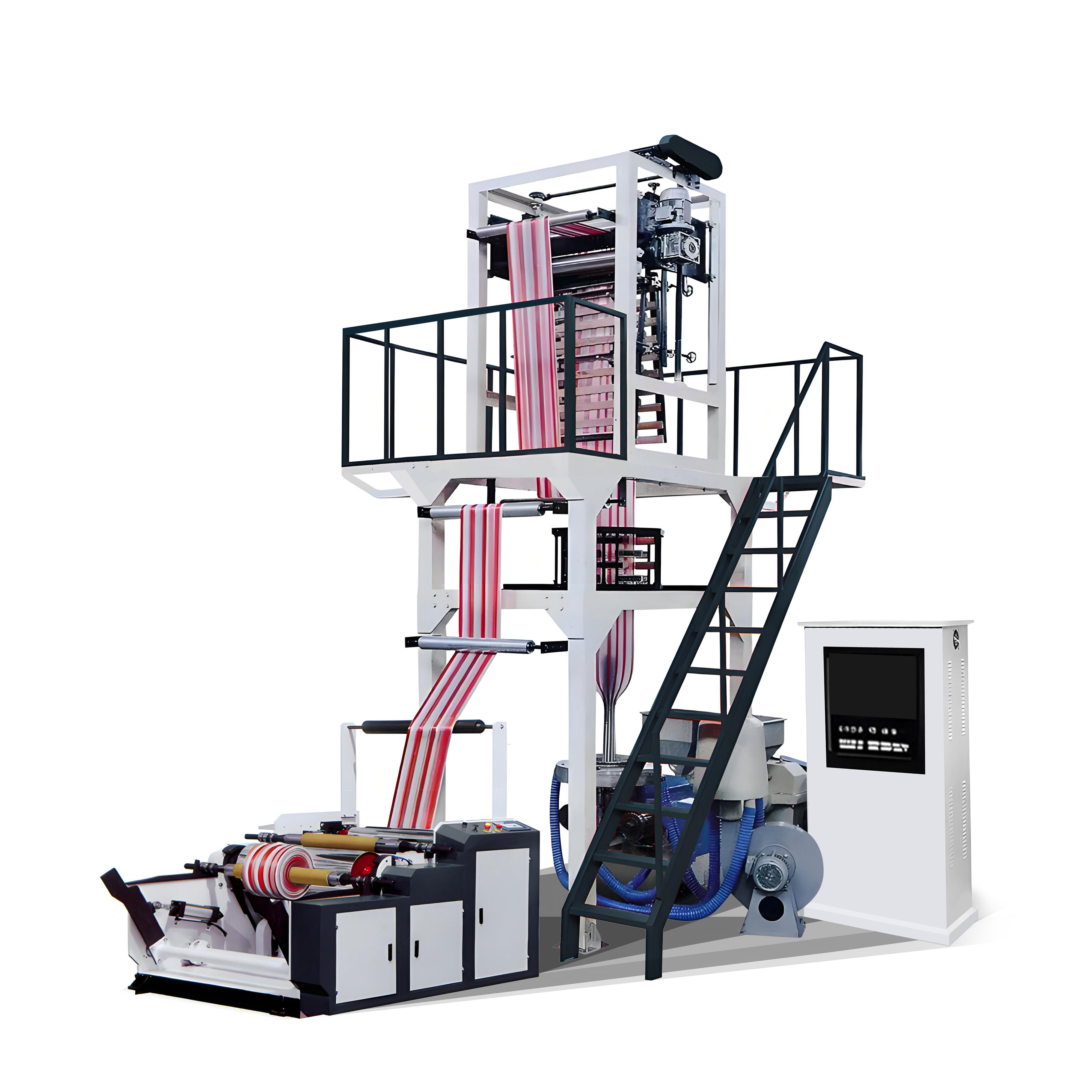
When manufacturers control how bubbles inflate during the multilayer film blowing process, they create what's called biaxial orientation. Basically, this means the polymer chains get aligned in two directions at once - around the circumference and along the length of the film. The result? A whole lot better performance characteristics. The stretching actually causes something called strain-induced crystallization, which makes these films much stronger under tension. We're talking about roughly 56% improvement in tensile strength compared to regular films, plus an impressive 300% boost in resistance to punctures. Getting the right stretch ratio matters a lot here. Most experts recommend keeping it around 2 to 1 for the circumferential direction and about 1.8 to 1 for the axial direction. These ratios help maintain structural integrity while distributing stress evenly across the material. Without proper balancing, packages might fail at seals or tear apart entirely when running through those fast moving production lines.
LLDPE Core + Tie-Layer Architecture: Validated 32% Increase in Elmendorf Tear Strength
A synergistic layer architecture enhances mechanical resilience:
- Linear low-density polyethylene (LLDPE) cores absorb impact energy via controlled crystallinity
- Reactive tie layers—typically maleic anhydride-grafted polyolefins—chemically anchor dissimilar polymers, suppressing delamination
- Extrusion trials validate a 32% improvement in Elmendorf tear strength, enabling downgauging without sacrificing durability
This co-extruded design redistributes dynamic stress across interfaces, inhibiting crack initiation and propagation under real-world handling conditions.
Functional Versatility: Balancing Sealability, Flexibility, and Thermal Stability
LDPE/LLDPE Sealant Layers Enable Reliable Heat Sealing Across Wide Temperature Ranges
LDPE and LLDPE sealant layers deliver unmatched thermal adaptability—maintaining reliable heat sealing from –50°C to 120°C. This range supports frozen food storage, microwave reheating, and terminal sterilization of medical devices. Their branched molecular structure provides:
- Low sealing initiation temperatures (as low as 90°C)
- High hot-tack strength to withstand fill pressures
- Exceptional resistance to brittle fracture at sub-zero temperatures
LDPE/LLDPE blends exhibit <15% variance in seal strength across this spectrum—outperforming homogeneous polymers by 40% in thermal stability testing. That consistency allows flexible pouches to retain cold-formability and rigid trays to endure autoclave cycles—all without compromising seal integrity or production efficiency.
Process-Material Synergy: Ensuring Compatibility and Integrity in Multilayer Film Blowing Technology
Polymer Pairing Rules—Why EVOH Requires PA or Tie Layers to Prevent Delamination
EVOH delivers industry-leading oxygen barrier performance—but its hydrophilic nature and poor adhesion to polyolefins like PE or PP make direct bonding unstable. Unmitigated, EVOH/PE interfaces delaminate under thermal cycling or mechanical strain, creating microchannels that compromise barrier function. Best-in-class designs resolve this through two proven strategies:
- Tie-layer mediation: Maleic anhydride-grafted polyolefins form covalent bonds with EVOH’s hydroxyl groups, boosting peel strength by 300–400%
- PA sandwiching: Nylon layers adjacent to EVOH improve moisture resistance while stabilizing interfacial cohesion
Thermal cycling tests show unmodified EVOH structures suffer 80% delamination after just 15 cycles. Proper pairing transforms EVOH from a liability into a durable, high-performance barrier—ensuring structural and functional integrity throughout extrusion, converting, and end-use.
FAQ
What are the advantages of a 7-layer film configuration over a 5-layer configuration?
A 7-layer film configuration significantly reduces oxygen permeability by 40-60% and moisture transmission by 25-35% compared to a 5-layer configuration, allowing for better preservation of product freshness.
How do EVOH and Polyamide contribute to barrier properties in packaging?
EVOH offers excellent oxygen barrier properties due to its ethylene-rich structure, while polyamide provides moisture resistance, allowing selective gas permeability. Together, they meet high standards required for products with long shelf lives.
What is biaxial orientation and how does it enhance film strength?
Biaxial orientation involves aligning polymer chains in two directions during the film blowing process, resulting in improved tensile strength and puncture resistance by facilitating strain-induced crystallization.
How do LDPE/LLDPE sealant layers aid in packaging?
LDPE/LLDPE sealant layers allow reliable heat sealing across a wide temperature range, supporting various processes like frozen storage and terminal sterilization. Their branched molecular structure enables low sealing temperatures and resistance to brittle fracture.
Why is it important to use tie layers with EVOH?
Tie layers, typically maleic anhydride-grafted polyolefins, are essential with EVOH due to its hydrophilic nature and poor adhesion to polyolefins. They enhance peel strength and prevent delamination, ensuring durable and effective packaging.
Table of Contents
- Barrier Performance Optimization Through Strategic Layer Design
- Mechanical Robustness: How Co-Extrusion and Biaxial Orientation Elevate Strength
- Functional Versatility: Balancing Sealability, Flexibility, and Thermal Stability
- Process-Material Synergy: Ensuring Compatibility and Integrity in Multilayer Film Blowing Technology
-
FAQ
- What are the advantages of a 7-layer film configuration over a 5-layer configuration?
- How do EVOH and Polyamide contribute to barrier properties in packaging?
- What is biaxial orientation and how does it enhance film strength?
- How do LDPE/LLDPE sealant layers aid in packaging?
- Why is it important to use tie layers with EVOH?