

 EN
EN

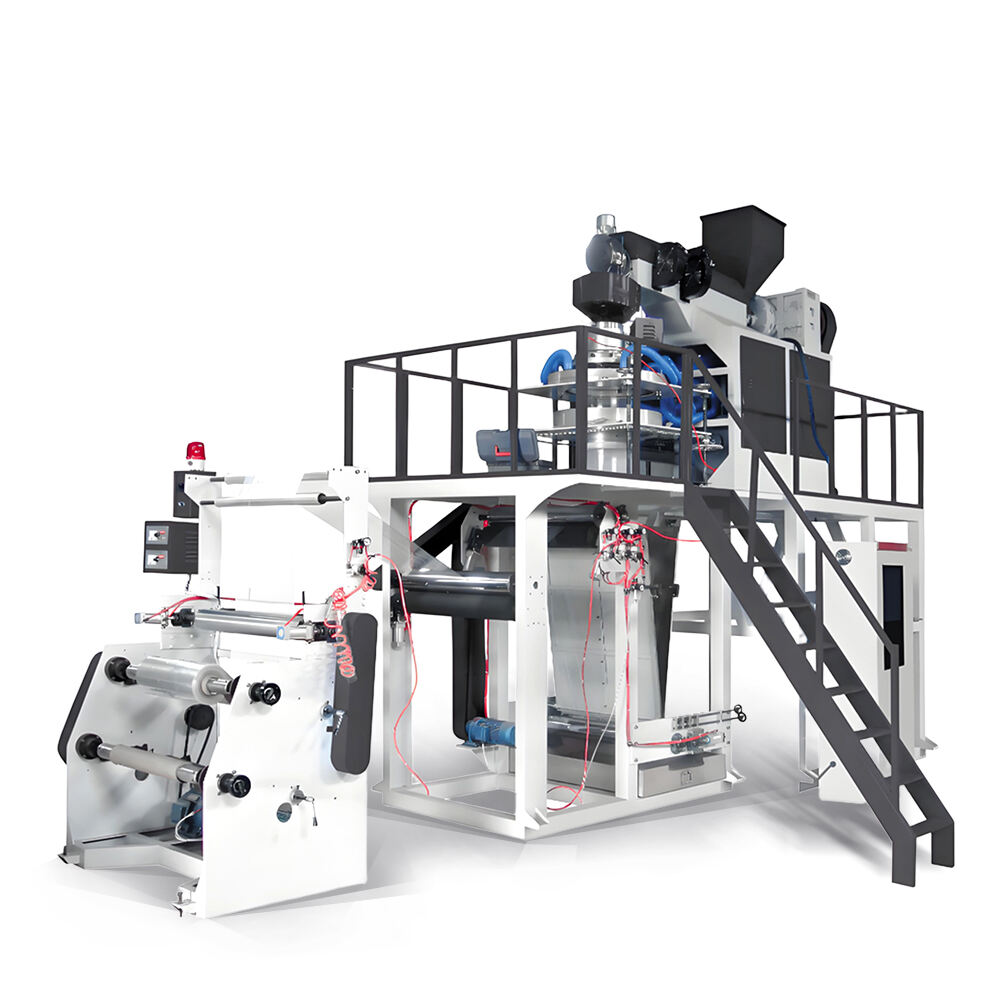
Global Demand Surge Driven by Regulation, ESG, and Market Readiness
EU Plastic Strategy, U.S. State Bans, and APAC Policy Acceleration
Regulations around the globe are pushing companies toward biodegradable film blowing machines at an impressive pace. Take the EU for example - their Single-Use Plastics Directive from 2021 wants to cut down plastic packaging waste by half by 2030, so manufacturers really have no choice but to switch to greener options. Over in the US, California and New York have already banned certain non-compostable films, forcing businesses to rethink their packaging strategies. Things are moving fast in Asia Pacific too. Thailand rolled out its Plastic Waste Management Roadmap in 2022, while India has strict Extended Producer Responsibility rules that make companies responsible for what happens to their products after sale. All these regulations are creating serious business opportunities. Market research suggests the compostable film industry could hit $17.2 billion by 2025 according to Transparency Market Research. Companies need to comply through various means now including EPR programs that demand 90% of packaging be either recyclable or compostable by 2025. There are hefty fines waiting for those who don't comply, sometimes over 800 euros per ton of non-compliant material. Plus, 38 different countries have started restricting imports of regular plastics, making it harder and harder to stick with traditional solutions.
ESG Reporting Requirements Pushing Packaging Suppliers to Adopt Biodegradable Film Blowing Machines
Environmental, Social, and Governance (ESG) criteria now drive capital allocation, with 75% of institutional investors screening for packaging sustainability (McKinsey 2023). Suppliers face escalating pressure from multinational brands to document emissions reductions through biodegradable film adoption. Machines enabling bio-based PLA/PBAT processing deliver measurable improvements across core ESG metrics:
| ESG Metric | Conventional Machines | Biodegradable Film Blowing Machines |
|---|---|---|
| Scope 3 Emissions | +15% baseline | 30–50% reduction (Science Advances 2022) |
| Waste Diversion | <10% compostable | 100% industrial compost compliance |
| Water Contamination Risk | High microplastic leakage | Elimination in <180 days |
Leading packaging suppliers prioritize these machines to meet CDP and GRI reporting standards—where lifecycle transparency reduces greenwashing liability by 40% (Carbon Trust 2023).
Environmental Advantages: Waste Reduction and Carbon Efficiency
Controlled Degradation in Soil and Compost vs. Persistent Microplastic Pollution
Film blowing machines designed for biodegradable materials produce packaging films that break down completely in soil or at industrial composting facilities within just a few months. What remains after decomposition is mostly water, some plant matter, and very little leftover material. Regular plastic is totally different though. It breaks apart into tiny microplastics that stick around for hundreds of years. These microscopic particles have already found their way into 83% of drinking water worldwide according to research from Potsdam in 2023. The good news is that these machines work with natural resins such as PLA and PBAT to stop non-biodegradable waste from building up everywhere. Landfills alone take in about 27 million tons of plastic each year, so this matters a lot. Beyond just reducing waste, this kind of tech fits right into what we call circular economy thinking. It keeps garbage out of our environment while also addressing the growing need for eco friendly packaging solutions across the globe.
Lifecycle Analysis: 30–50% Lower CO₂e vs. Conventional LDPE Film Production
Lifecycle studies show that making biodegradable films cuts down on CO2e emissions by around 30 to 50 percent compared to regular plastic made from oil. There are several reasons for this improvement. First, the extrusion process uses less energy overall, cutting power needs by roughly 18 to 22 percent per ton produced. And then there's the material source factor. Many companies now get their resin from things like sugarcane, which actually pulls carbon out of the air as it grows before being processed. A recent study looked at how these biodegradable mulch films perform throughout their entire life cycle, from factory floor to breakdown in soil. What they found was pretty impressive: about 40 percent less carbon impact than traditional polyethylene products. When manufacturers start using clean energy sources alongside these eco-friendly materials, the environmental benefits really take off. We're seeing this happen across different regions already, as businesses seek better ways to package goods without harming our planet.
Technical Enablers: Extrusion Precision for PLA, PBAT, and Bio-Blend Compatibility
Temperature-Sensitive Melt Processing and Die Design Innovations
The growing worldwide interest in biodegradable films has driven significant advancements in machine design for handling sensitive materials like PLA (polylactic acid) and PBAT (polybutylene adipate terephthalate). These polymers have specific melting points - around 160 to 190 degrees Celsius for PLA and roughly 125 to 165 for PBAT. Going beyond these temperature ranges tends to break down the molecules too quickly. Manufacturers have developed several key improvements to maintain film quality. For instance, many systems now feature multiple temperature zones along the barrel to avoid overheating issues. Special mixing components reduce shear forces that can damage the polymer structure when blending different bio materials. Some equipment even incorporates computer controlled dies that keep temperatures within half a degree across wide production areas. Real time monitoring systems adjust output automatically when viscosity changes occur. All these features help address the problem of inconsistent thickness that plagued earlier generations of biodegradable film production, where variance could reach 15 to 30 percent. Top companies are adding infrared imaging technology alongside smart algorithms to spot and fix crystallinity problems in products like farm mulch and food packaging wraps. A recent study from 2024 showed that better melt stability cuts down on wasted material by about 22 percent while still meeting those important compostability requirements set forth in ASTM D6400 standards.
Commercial Adoption: From Brand Commitments to Machine Supplier Capabilities
How Leading FMCG Brands Are Specifying Biodegradable Film Blowing Machines in Their Supply Chain
Many Fast Moving Consumer Goods companies are starting to demand biodegradable film blowing machines when they sign their procurement contracts, all part of their commitment to hit those 2025 sustainability targets. A recent survey from Packaging Digest in 2023 found that around two thirds of leading manufacturers want their suppliers to have equipment that can handle these special PLA/PBAT blend materials. The reason? Consumers are pushing harder for eco friendly options and regulators are setting tight deadlines. These new specs mean suppliers face some serious challenges. Machines need to keep thickness variations within half a percent when working with bio resins, plus they have to run almost constantly at about 95% uptime. Companies that show real proof of their environmental impact through third party certifications and offer quick maintenance services tend to get better deals. When it comes down to actually getting these systems up and running successfully, there are really three main things that matter most: making sure the equipment works well with the company's own unique biopolymer formulas, having proper paperwork for selling products worldwide, and maintaining service teams that can respond to problems within a day or so. These qualities are becoming more important than just looking at initial costs when deciding which suppliers to work with.
FAQ
What drives the global demand for biodegradable film blowing machines?
The global demand is largely driven by stringent regulations like the EU Single-Use Plastics Directive, U.S. state bans, and strict APAC policies, as well as increasing ESG reporting requirements from brands and investors.
What environmental benefits do biodegradable film blowing machines offer?
These machines help reduce waste and CO2e emissions significantly. They produce films that fully degrade into natural elements, unlike traditional plastics that persist as microplastics.
How do biodegradable films differ technically from conventional films?
Biodegradable films require precise extrusion technologies to handle temperature-sensitive materials like PLA and PBAT, which allows for complete compostability.
Are leading brands adopting biodegradable film blowing machines?
Yes, many FMCG brands now specify these machines in their supply chain to meet sustainability targets and respond to consumer and regulatory demands.