

 EN
EN

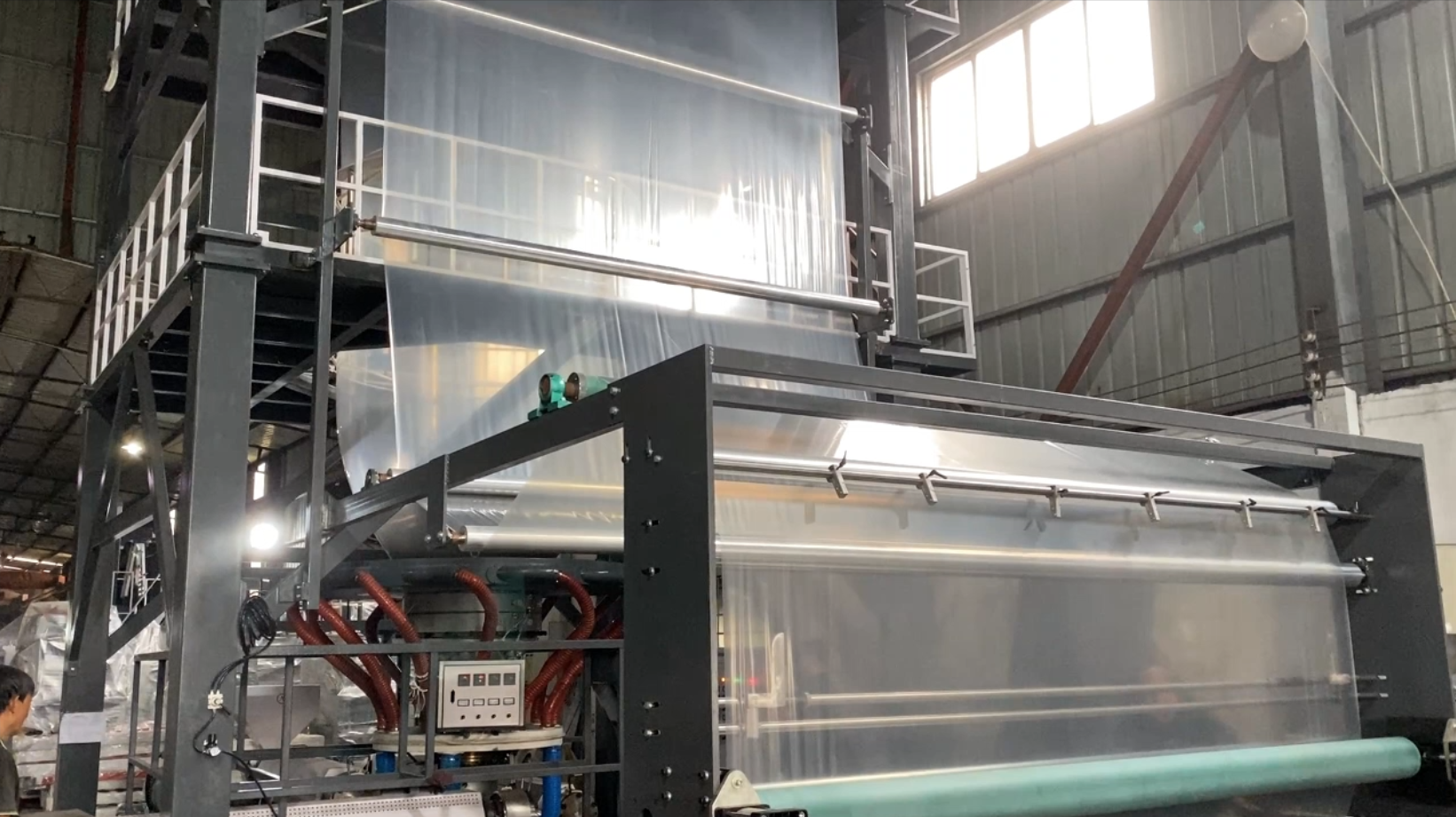
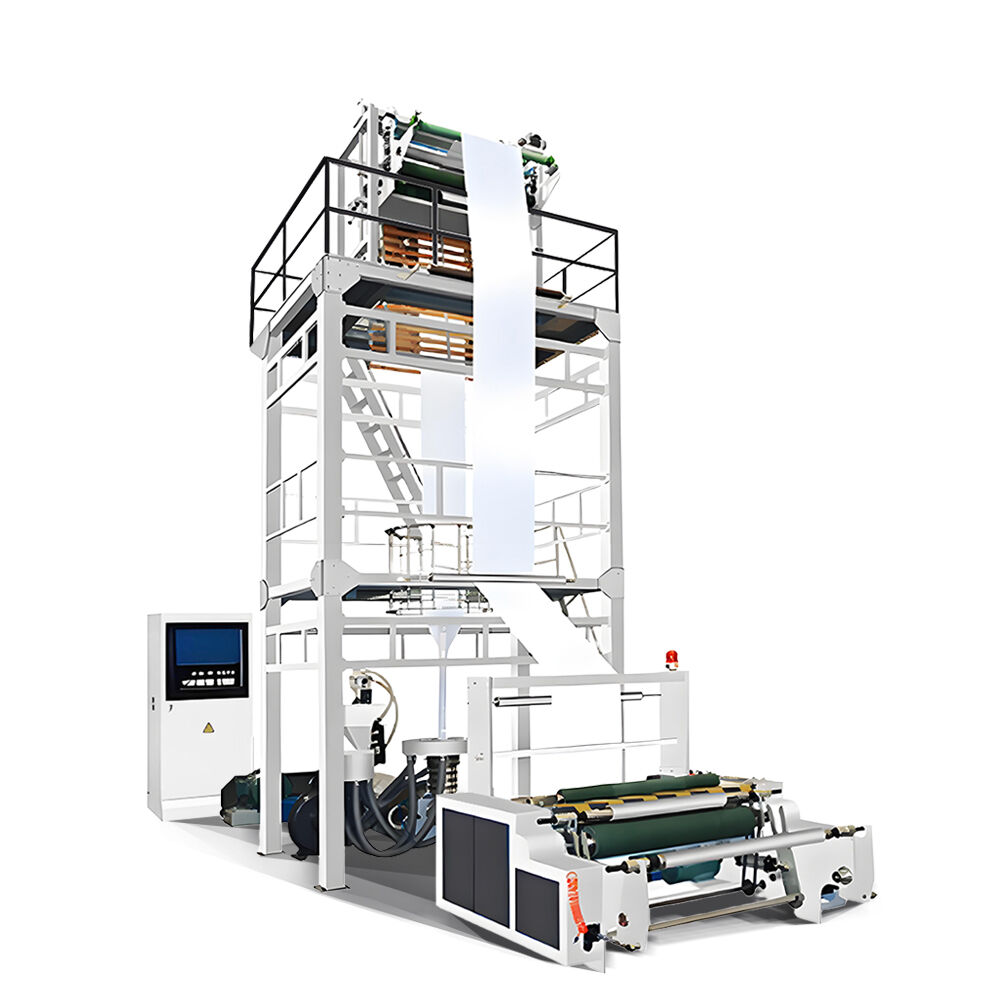
Core Components of Blown Film Extruders and Their Impact on Melt Uniformity
Screw Geometry and Compression Ratio: Balancing Shear, Mixing, and Melt Homogeneity
How screws are designed plays a big role in achieving consistent melt quality during blown film extrusion processes. When it comes to compression ratios, most manufacturers aim for something between 2.5 to 4 times the diameter. This range allows proper compaction of materials so they fully melt without causing damage from excessive shear forces, especially important when working with delicate resins as noted in recent polymer engineering studies. Getting the flight depths right means finding the sweet spot between melting efficiency and good mixing action. Shallower flights create more shear which helps mix everything together better, but operators need to watch temperatures closely to prevent overheating issues. Special barrier screws with separate channels for solids and melted material cut down on those pesky unmelted particles by around 40 percent compared to regular designs. For heat sensitive materials like EVA, keeping the compression zone short makes sense because it reduces how long the material stays exposed to high temperatures. Angles on the helix should be somewhere between 17 and 20 degrees to get optimal movement forward while still keeping temperature variations within about 2 degrees Celsius throughout the melt stream.
Barrel Temperature Zoning: Preventing Thermal Degradation While Ensuring Complete Melting
Getting the right thermal profile across different barrel zones makes all the difference when it comes to proper melting without damaging materials. The feed zones typically run around 30 to 50 degrees Celsius below what the polymer actually melts at. This helps stop bridging issues while keeping things flowing smoothly through the system. When we get to transition zones, temperature increases happen at different rates depending on the polymer type. Crystalline stuff like polypropylene needs slower heating compared to amorphous materials such as PET. Metering zones are pretty strict about temperature control too, usually staying within plus or minus 1 degree Celsius thanks to those PID controllers. If temperatures go beyond this range, studies show polyethylene's molecular weight drops by about 15%, which isn't good news for product quality. Current equipment generally has between five and seven separate temperature zones now. Air gap insulation helps keep heat from one zone from affecting others. And let's not forget infrared sensors that constantly check melt consistency. These little guys save about 18% in energy costs and make sure no unmelted bits end up ruining the final film product.
Die and Bubble Control Systems for Dimensional Stability
Annular Die Design—Lip Gap, Land Length, and Flow Distribution for Symmetric Bubble Formation
The shape of annular dies plays a major role in determining whether bubbles form symmetrically and if the material thickness remains consistent right from production start. The lip gap, which refers to space between those die lips, generally falls somewhere between 1.0 and 2.5 millimeters. This range helps find that sweet spot where there's enough resistance to control flow but not so much that it creates unwanted pressure drops, which would lead to uneven thickness at the beginning stage. For land length requirements, most manufacturers aim for something over fifteen times whatever their lip gap measurement happens to be. This extended length really helps stabilize the flow inside the die, getting rid of those annoying weld lines while making sure everything moves at roughly the same speed all around the annular area. Spiral mandrel distributors have become quite popular these days because they're designed with computer optimized pathways that fight back against polymer memory issues and reduce flow imbalances. These imbalances can cause problems like fishtailing or asymmetrical expansions during processing. And finally, when molten material leaves the die with matching velocity and temperature characteristics throughout, we tend to see those nice symmetrical bubbles forming naturally without any additional adjustments needed later on.
Air Ring Configuration and Cooling Air Dynamics for Controlled Bubble Quenching and Gauge Consistency
The way an air ring performs makes all the difference when it comes to keeping bubbles stable, controlling how fast things cool down, and getting that final thickness just right. These dual-lip models create smooth cooling air at around half to three meters per second. Inside, there are chambers that keep pressure steady, plus those adjustable lips let operators tweak where the air goes. Getting the air distributed evenly around the circumference stops those annoying thickness variations across the film. What's really interesting is what happens near the frost line area. When we crank up the cooling there, it actually helps reduce these crystal formation differences in materials like polyolefins. Some manufacturers have started using Internal Bubble Cooling systems which boost heat transfer efficiency by about 30%. This means production lines can run faster without everything falling apart. Proper quench control is essential because it fixes the molecules in place, giving us predictable strength characteristics. Without good quench management, those melt vibrations start causing problems with thickness consistency in single layer films, something no processor wants to deal with during production runs.
Precision Process Control Strategies for Thickness Uniformity and Defect Minimization
Auto Gauge Control (AGC) Integration with In-Line IR Scanners and Real-Time Feedback Loops
When film thickness varies more than plus or minus 3%, it really messes with how well the product works as a barrier, affects its strength, and creates problems with sealing. This kind of inconsistency can actually lead to around 15% more waste according to Packaging Digest from last year. Auto Gauge Control or AGC systems tackle these issues head on. They use infrared scanners that aren't touching the material at all, scanning around the bubble every half second to spot even tiny changes in thickness down to the micron level. What happens next is pretty smart stuff. The system takes all that real time information and feeds it into algorithms that automatically tweak things like the position of the die lips with incredible precision (about half a micrometer accuracy), adjust how fast the cooling air moves around, and control how quickly the finished product gets pulled away from the machine. All this constant fine tuning brings thickness variation down below 1.5%. It also helps eliminate common defects such as gel spots and those annoying weak seals that nobody wants. For manufacturers working with monolayer HDPE films specifically, adding AGC technology typically means cutting down on wasted materials by roughly 12% while speeding up production lines by about 9%. These improvements become especially noticeable during those tricky moments when extrusion rates spike unexpectedly because the system keeps the bubble stable and maintains proper dimensions throughout.
Operational Calibration Best Practices for Blown Film Extruders
Keeping equipment properly calibrated isn't just good practice, it's absolutely necessary for maintaining consistent gauge measurements and cutting down on production defects. Start with checking the thermal setup first. Those barrel zones need to stay within about 2 degrees Celsius of their target temperature range otherwise we'll get either unmelted material or worse, thermal breakdown issues. Then look at the air ring balance. Even small imbalances can cause bubbles to form and lead to inconsistent film thickness across the width. Getting the haul-off speed matched correctly with what comes out of the extruder is another crucial step that prevents those annoying draw resonance problems everyone hates dealing with. Weekly checks on the AGC systems are a must too. Need to make sure those infrared scanners actually pick up tiny changes in thickness down at the micron level and that the actuators move when they should according to specs. All the important numbers like pressure readings, temperatures, and motor speeds should go into some kind of central database so we have something concrete to reference later. Train multiple people how to read through these records and know when something needs adjusting before it becomes a bigger problem. When done right, this whole process typically cuts scrap waste by around 30 percent and keeps our films meeting all the required standards for clarity, protection properties, and strength throughout production runs.
FAQ
What is a blown film extruder?
A blown film extruder is a machine used to create films from thermoplastic materials by blowing them through a die into the desired film shape.
How important is screw geometry in blown film extrusion?
Screw geometry is crucial as it impacts shear, mixing, and the homogeneity of the melt during the extrusion process.
Why is temperature zoning important in extrusion?
Temperature zoning prevents thermal degradation and ensures that the polymers are completely melted without damaging the material.
How does Auto Gauge Control help in extrusion processes?
Auto Gauge Control integrates with IR scanners to provide real-time adjustments, which helps maintain uniform film thickness and reduces defects.
Why is operational calibration necessary for blown film extruders?
Consistency in gauge measurements and reduction in production defects require regular operational calibration of equipment.